How three tea farms put 5,000 workers on one ERPNext system
· Shrivardhan Goenka · 6 min read
This article is part of our Frappeverse Mumbai 2026 coverage, including all nine keynotes and selected community stories.
Rungamattee Tea's ERPNext implementation tracks 6,000 workers daily, manages 35 lakh kilograms of tea a year and gives three farms one operating record. It also helped cut the company's statutory audit from 45 days to 21.
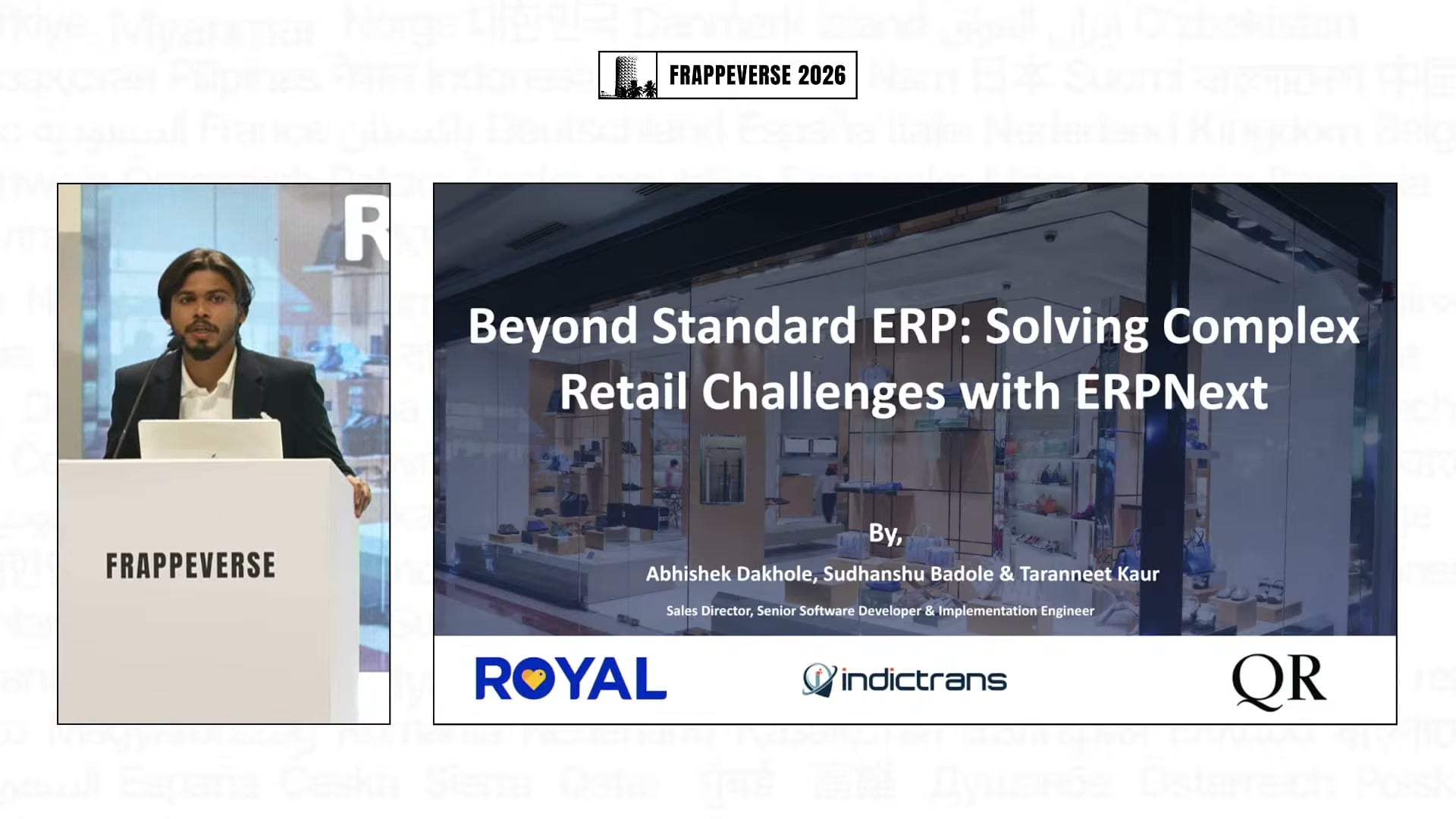
Those results came from a three-year implementation that replaced a DOS-era wage system and connected field work, factories, wages, sales, purchasing and accounts. At Frappeverse Mumbai 2026, Jai Vardhan Kejriwal, director at Rungamattee Tea & Industries Ltd., explained how the company built it and why the software was only part of the work.
A tea estate runs more than a factory
Rungamattee's operating model made a standard ERP rollout unusually demanding. Its estates provide housing, water, healthcare, childcare and transport. They also run farms, factories, workshops, ration distribution and statutory compliance across four locations in Dooars, Assam and Cachar.
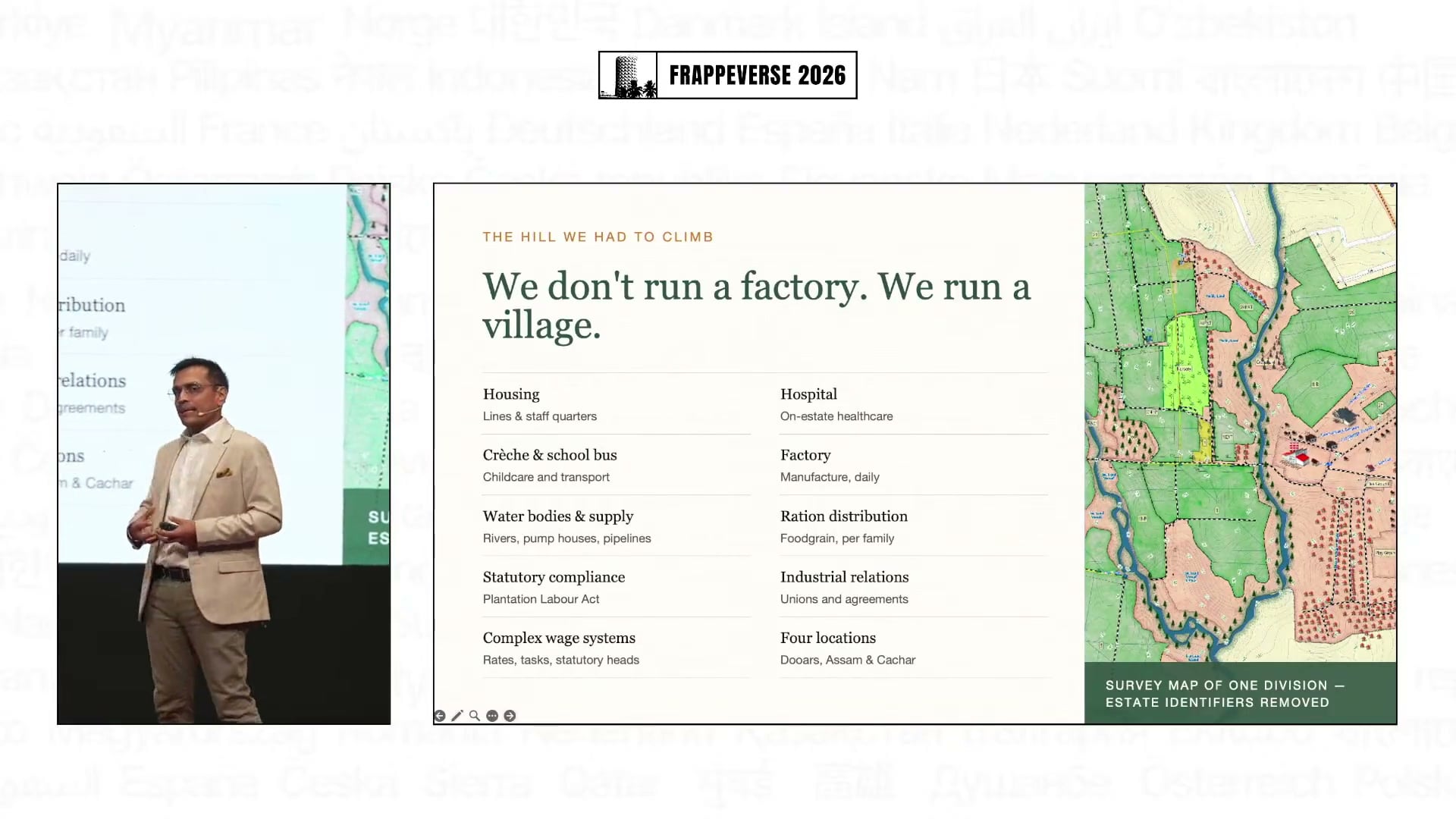
Agricultural work adds another layer. The same tea bushes are harvested every seven to ten days, while teams handle pest detection, spraying, drainage, pruning and fertilising. Raw leaf then moves into an on-estate factory with its own maintenance workers.
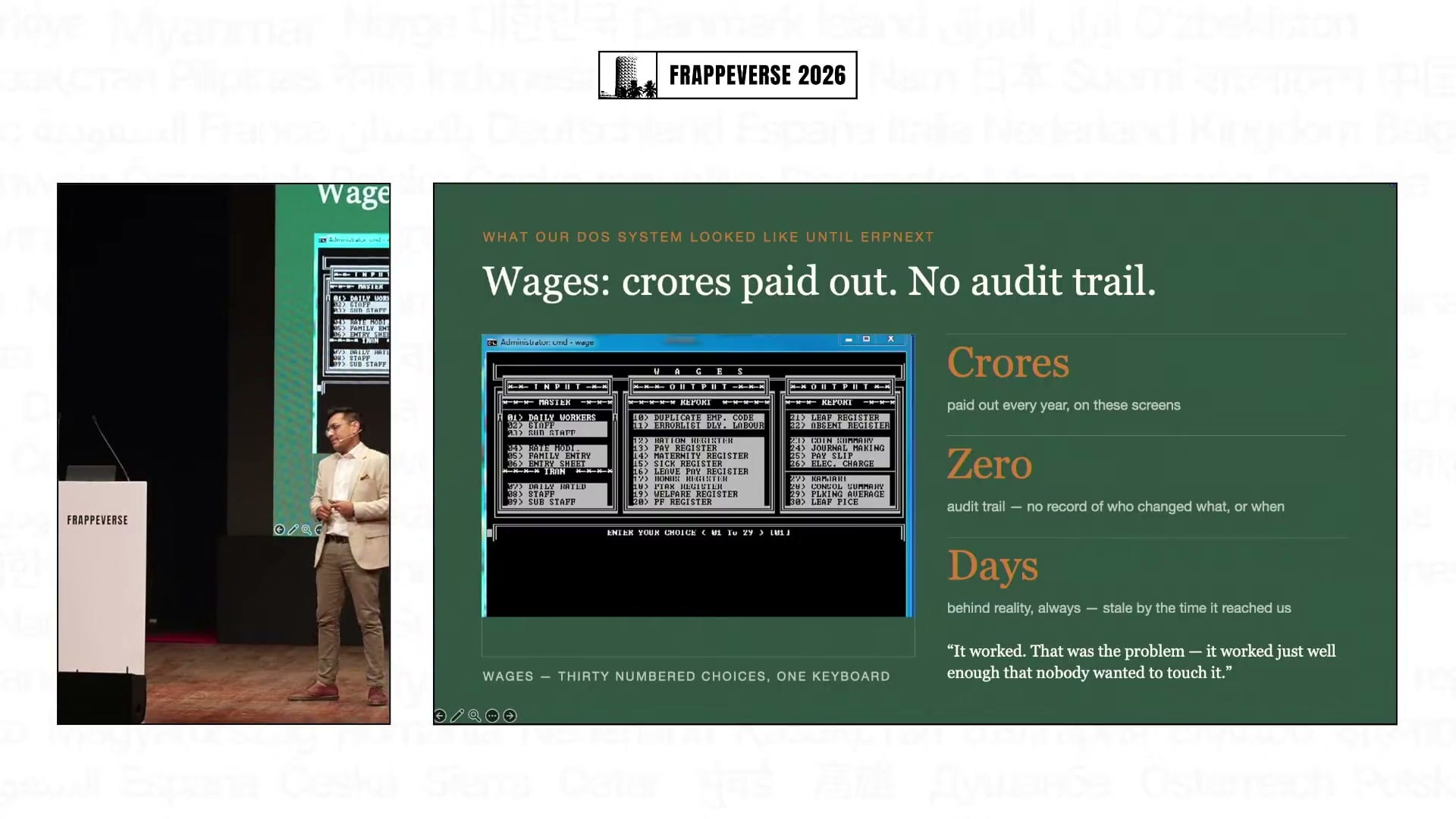
The first system Jai examined was purchasing. A request for the workflow behind the previous 10 or 15 orders could not be answered without working through stacks of paper. Wages presented the larger risk. About 65 percent of the company's costs passed through a DOS system from around 1990, built on unencrypted flat files with no dependable audit trail.
Rungamattee tried the industry's established plantation software, but found desktop products that were only a generation ahead. An SAP partner estimated licensing at roughly one percent of turnover. The company needed standard buying, selling, stock and accounting modules, plus enough flexibility to model plantation work. That combination led it to ERPNext.
The wage engine moved rules into settings
Plantation wages depend on more than attendance and a daily rate. A worker's task changes with the harvest interval, whether the leaf is plucked by hand or with a device, the agricultural operation being performed, incentive rules, deductions and agreements with a unionised workforce.
The old system buried that logic in code. Rungamattee's custom Frappe app expressed the variables and conditions as settings. A reviewer could see the rule, change it when an agreement changed and audit how a wage was calculated.
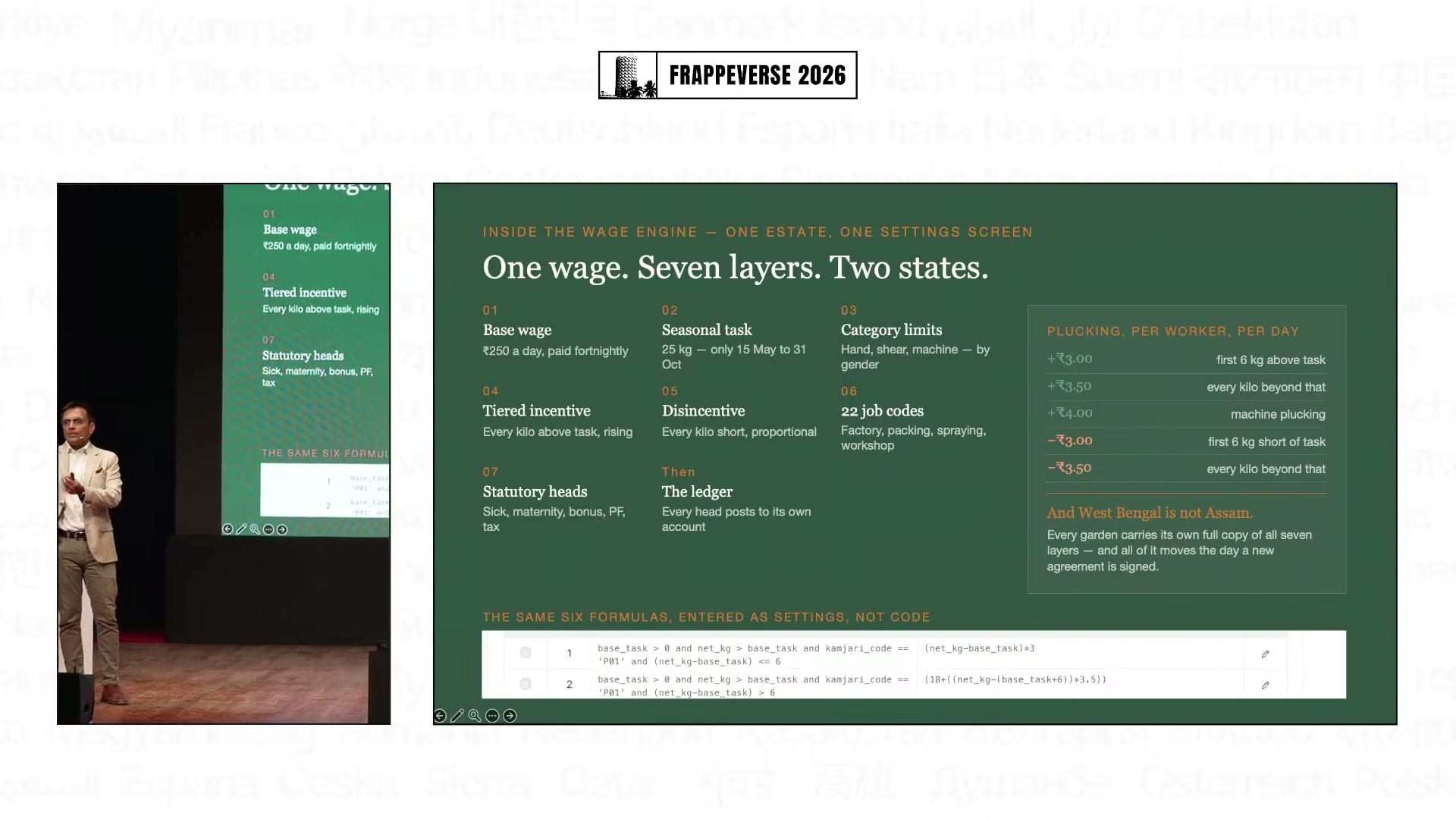
On a typical day, biometric devices record attendance for about 5,000 people. The system compiles weekly or biweekly wages, generates paysheets and prepares the bank upload. Each rupee keeps an audit trail. More than 90 screens serve managers, factory and labour inspectors, and other stakeholders without creating separate records for each view.
The custom layer still uses ERPNext's core transactions wherever possible. In the audience questions, Jai explained that plantation events post the corresponding general-ledger and stock entries into the standard system. The team has already open-sourced the wage engine and is considering whether more of the plantation app can be released.
One record shortened the audit
The finished system connects the field, factory, wages, sales, purchasing and accounts across three farms. Invoices are uploaded and tracked, operational data is available without waiting for a department to compile it, and each group works from the same underlying record.
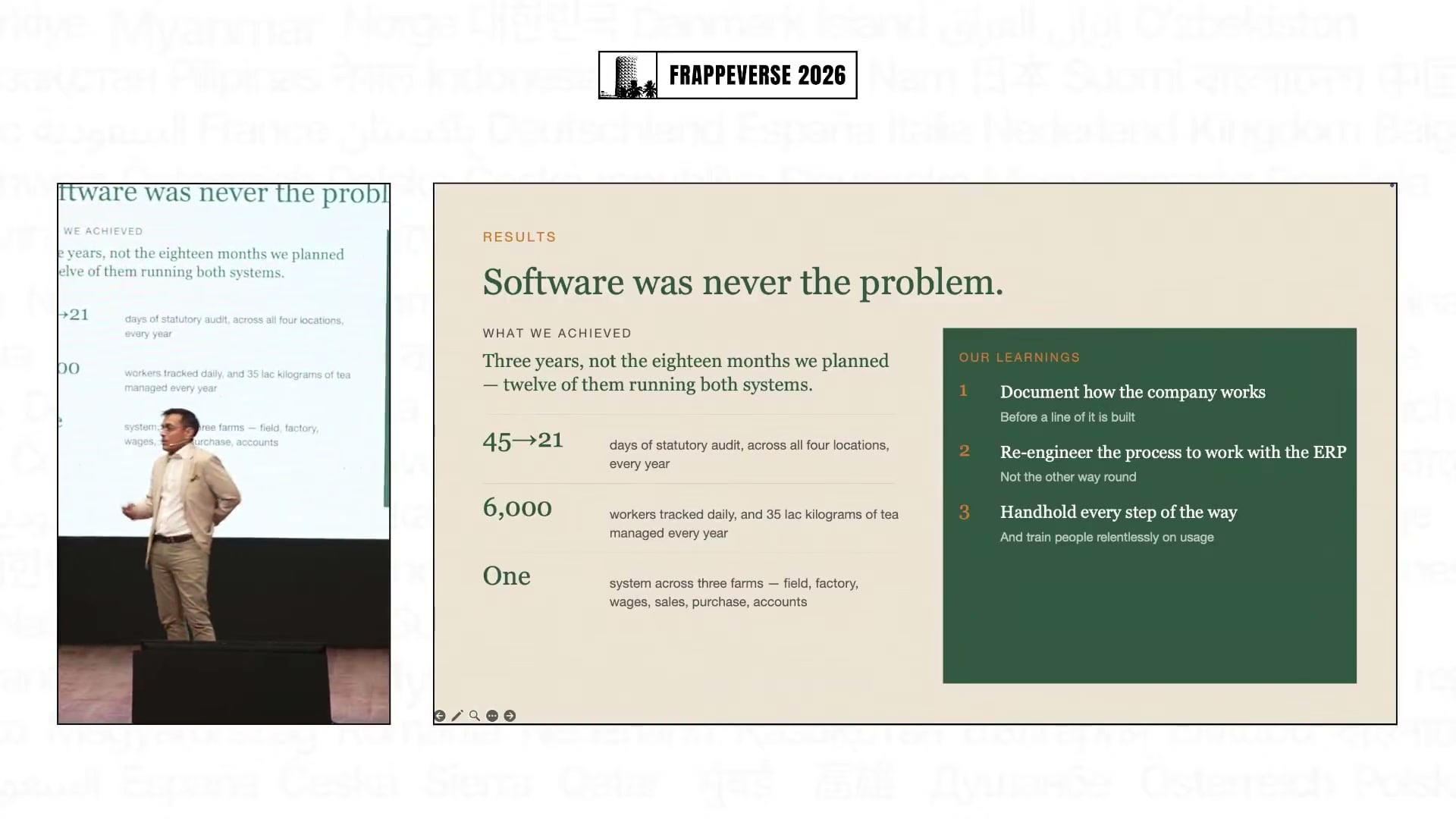
Rungamattee's final numbers give that change some weight. The statutory audit now takes 21 days across all four locations, including travel, down from 45. The results slide reported 6,000 workers tracked daily and 35 lakh kilograms of tea managed every year.
The rollout took three years instead of the planned 12 to 18 months. For 12 of those months, both systems ran together. Jai's advice was practical: document how the company works before writing the implementation, redesign processes to work with the ERP and keep training people throughout the change.
Rungamattee kept ERPNext's accounting, stock and purchasing foundations, then made its unusual wage rules visible and maintainable. The technology held up. Getting the organisation onto one way of working took the real time.
Watch the full Day 1, Track 1 livestream from the start of this talk