ERP for garment manufacturing in India
We used Crator to build working garment ERP software around an Indian factory workflow. It follows a buyer order through six size-colour SKUs, cutting, bundle movement, outside embroidery, final inspection, packing, delivery and invoicing. The screens below come from the live ERP, not a design mockup.
Why garment manufacturing software has to begin with the buyer order
A garment order is not one finished item with one quantity. The style branches into colour and size combinations, then moves through cutting, bundles, line work, outside processes, inspection and packing. The ERP has to preserve that structure while stock, purchasing, delivery and accounts continue to use standard documents.
The style quantity hides the real SKU demand
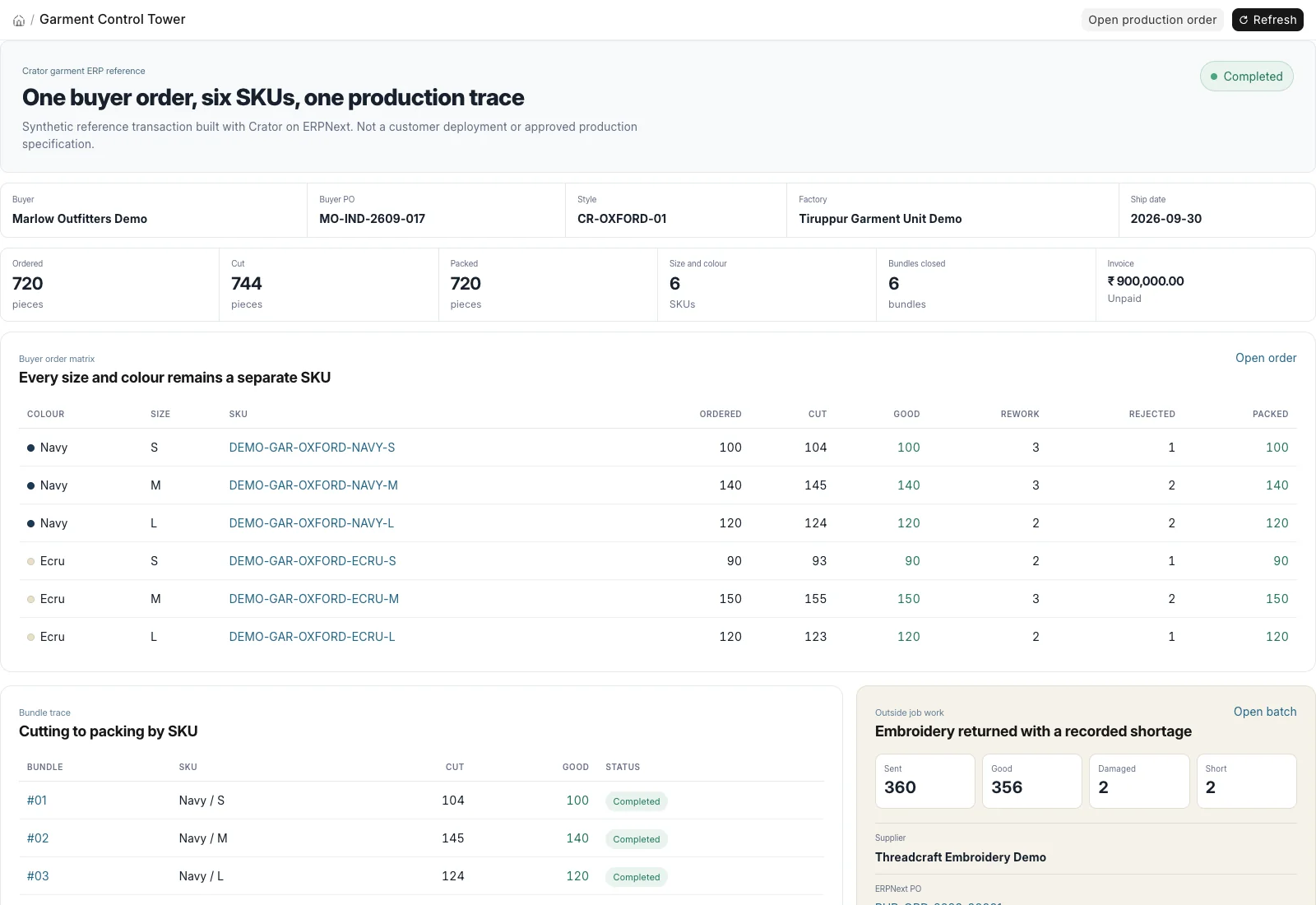
A 720-piece shirt order can contain six separately sellable size-colour SKUs. Material planning, production and packing have to reconcile each row, not only the order total.
Cut quantity is not the same as ordered quantity
Marker planning, fabric lots, shade, width, layers and allowed extras affect the cutting plan. The system has to explain how cut pieces become good, rework, rejected and packed pieces.
Production moves in bundles
Bundles preserve colour, size and quantity as work moves through embroidery, sewing and finishing. A line total without the bundle identity cannot answer which order row is late or short.
Quality can stop the commercial transaction
A failed final inspection should hold the order before packing, delivery and invoicing. The test record and the blocked business documents need to tell the same story.
Crator added those garment records as a separate Frappe app. ERPNext remains the source of truth for customers, suppliers, Items, BOMs, Work Orders, stock, quality, delivery and accounts.
Style and cutting
One style becomes six production and stock records
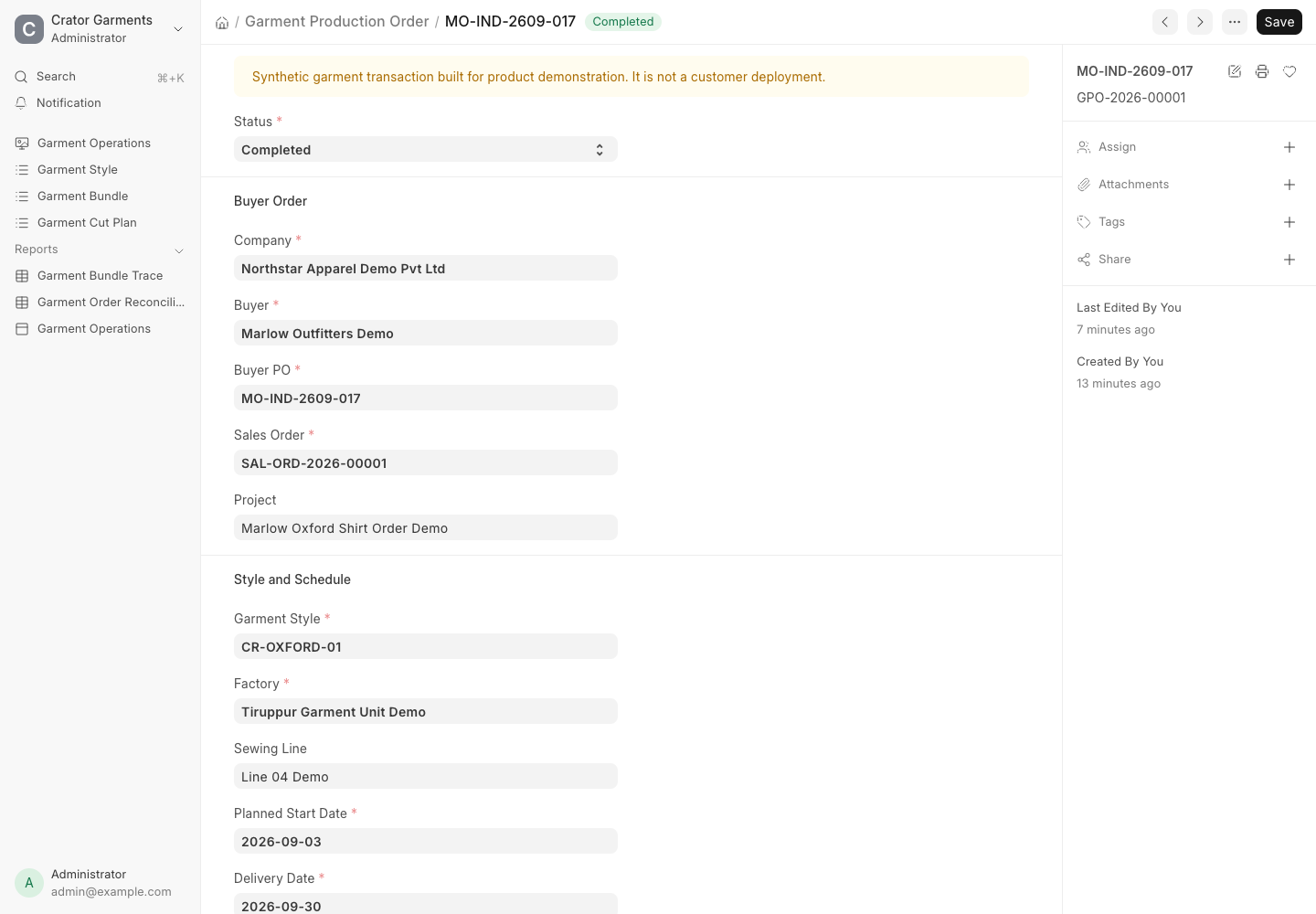
The reference order is a long-sleeve Oxford shirt in Navy and Ecru, each in S, M and L. Every combination is a separate ERPNext Item with its own BOM, Work Order and manufacturing Stock Entry. The garment order matrix keeps all six rows under the buyer PO.
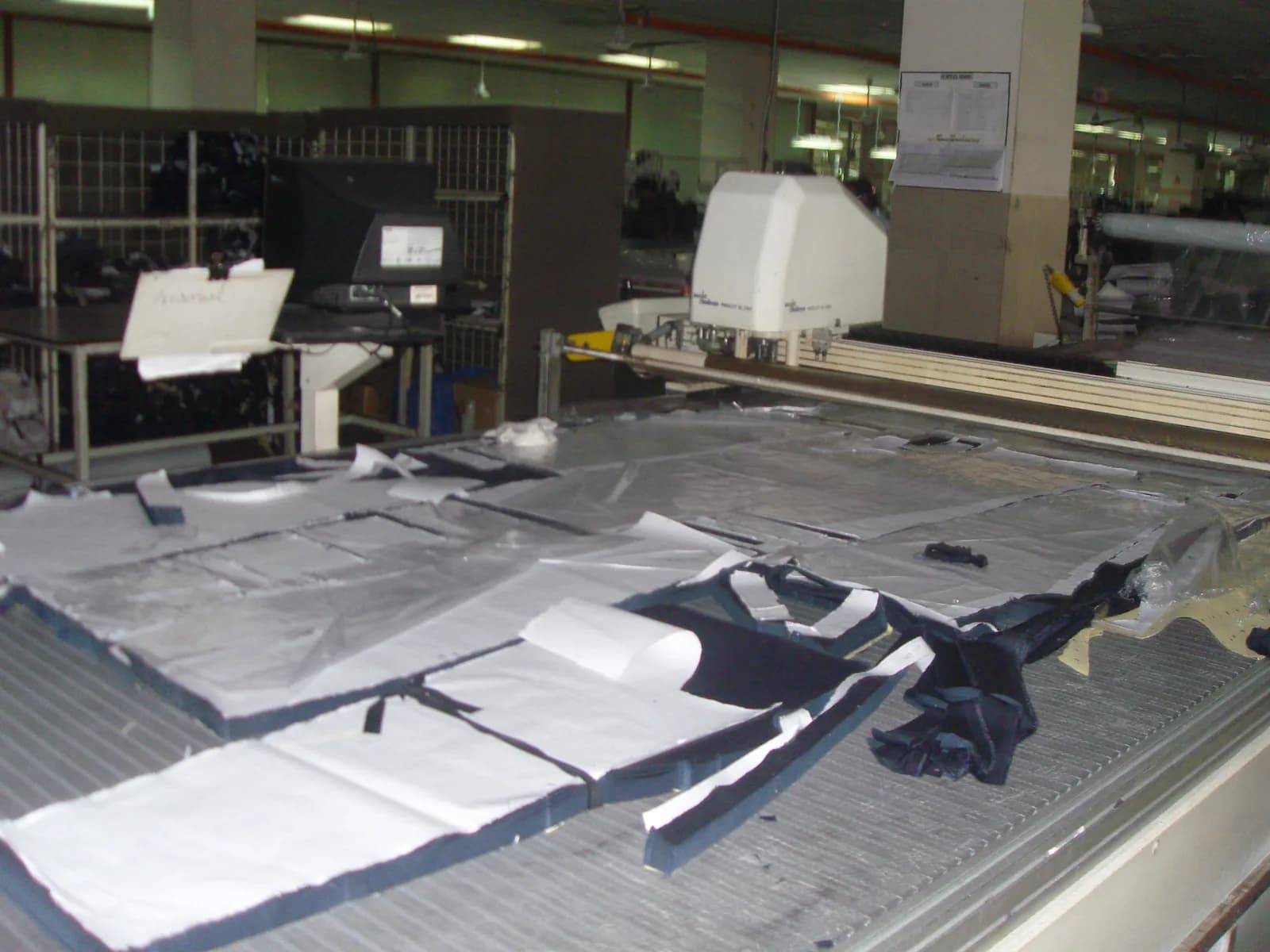
The cut plan records fabric lot, shade, roll width, marker reference, layers, pieces and consumption. It plans 744 cut pieces against 720 ordered pieces, so the extra cut allowance stays visible instead of disappearing into a single production total.
Production trace
Bundles keep colour and size attached to line progress
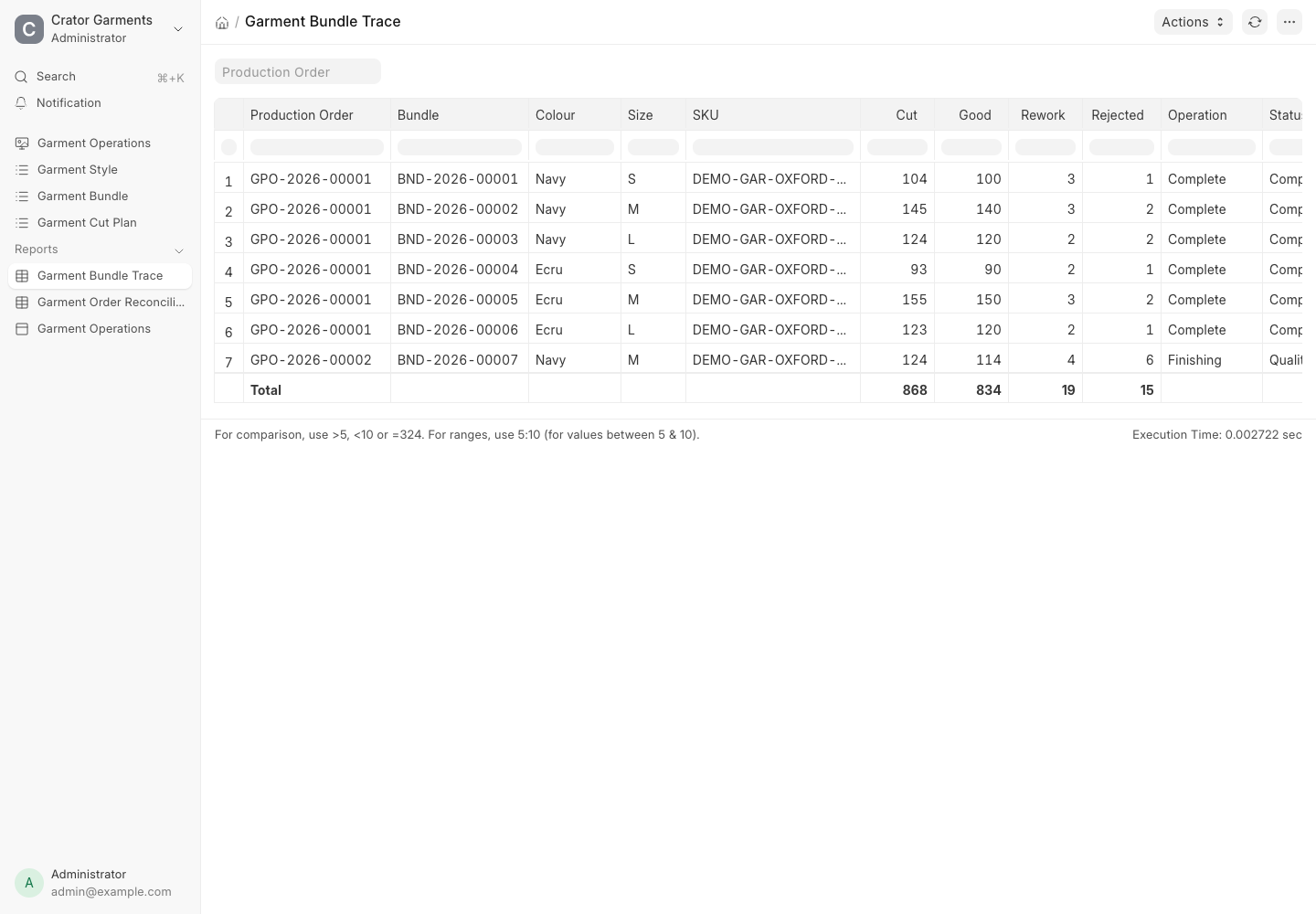
Six bundles carry the order matrix through cutting, embroidery, sewing, finishing and packing. Each bundle must reconcile every cut piece into good, rework or rejected quantity before it can close.
The bundle trace report gives production teams a direct path from the garment order to the affected colour, size, SKU and current operation. It also exposes the held bundle from the separate failed-order scenario.
Outside job work
Sent quantity has to return with an explanation
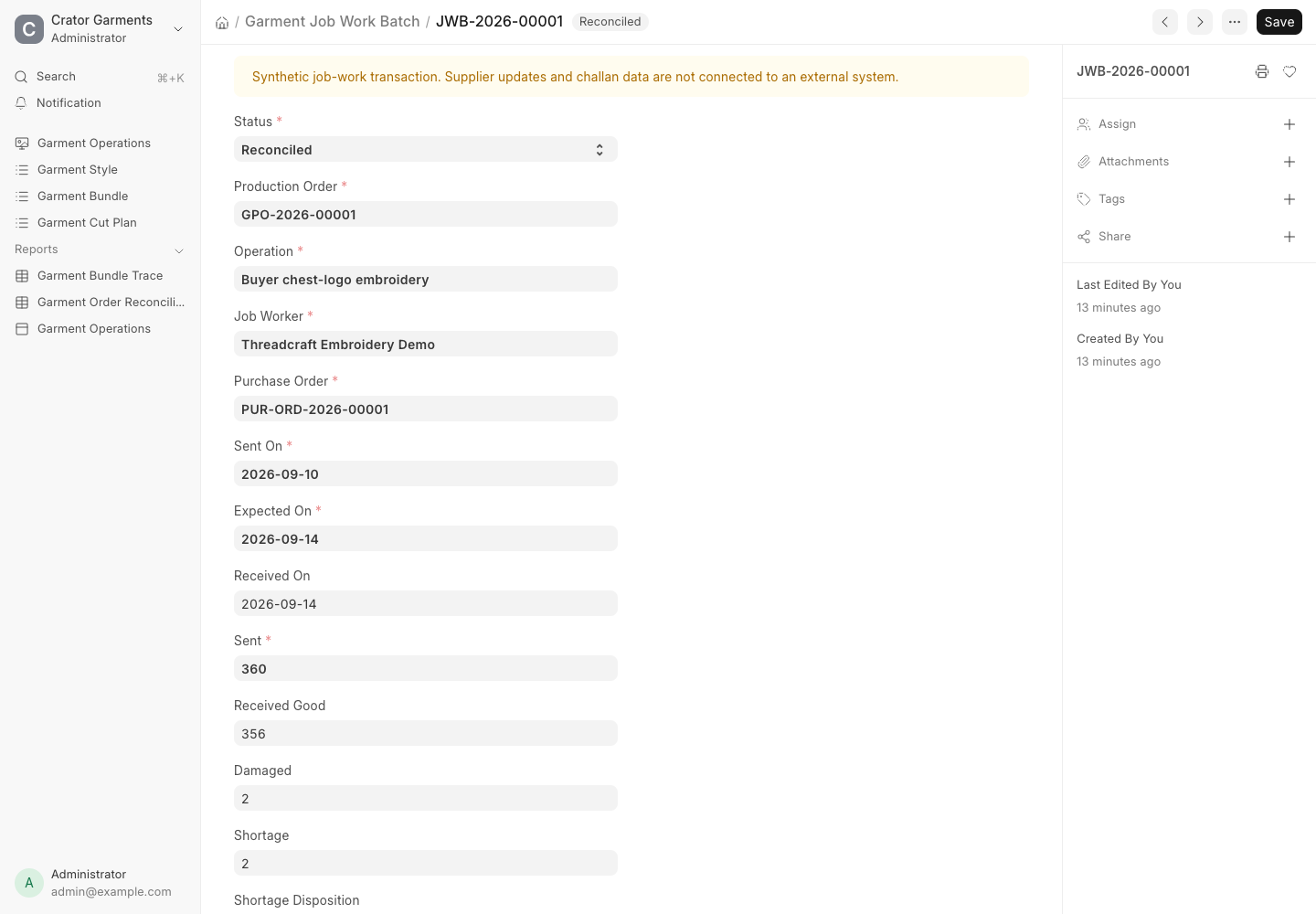
The embroidery batch links the production order to a real ERPNext Purchase Order and supplier. It records 360 pieces sent, 356 received good, two damaged and two short. The batch cannot be marked reconciled until every sent piece has an outcome.
This reference uses simulated supplier updates. A real implementation would choose whether challans, ERPNext subcontracting, barcode scans or a supplier portal should provide those events.
Quality gate
A failed inspection cannot quietly become a delivery
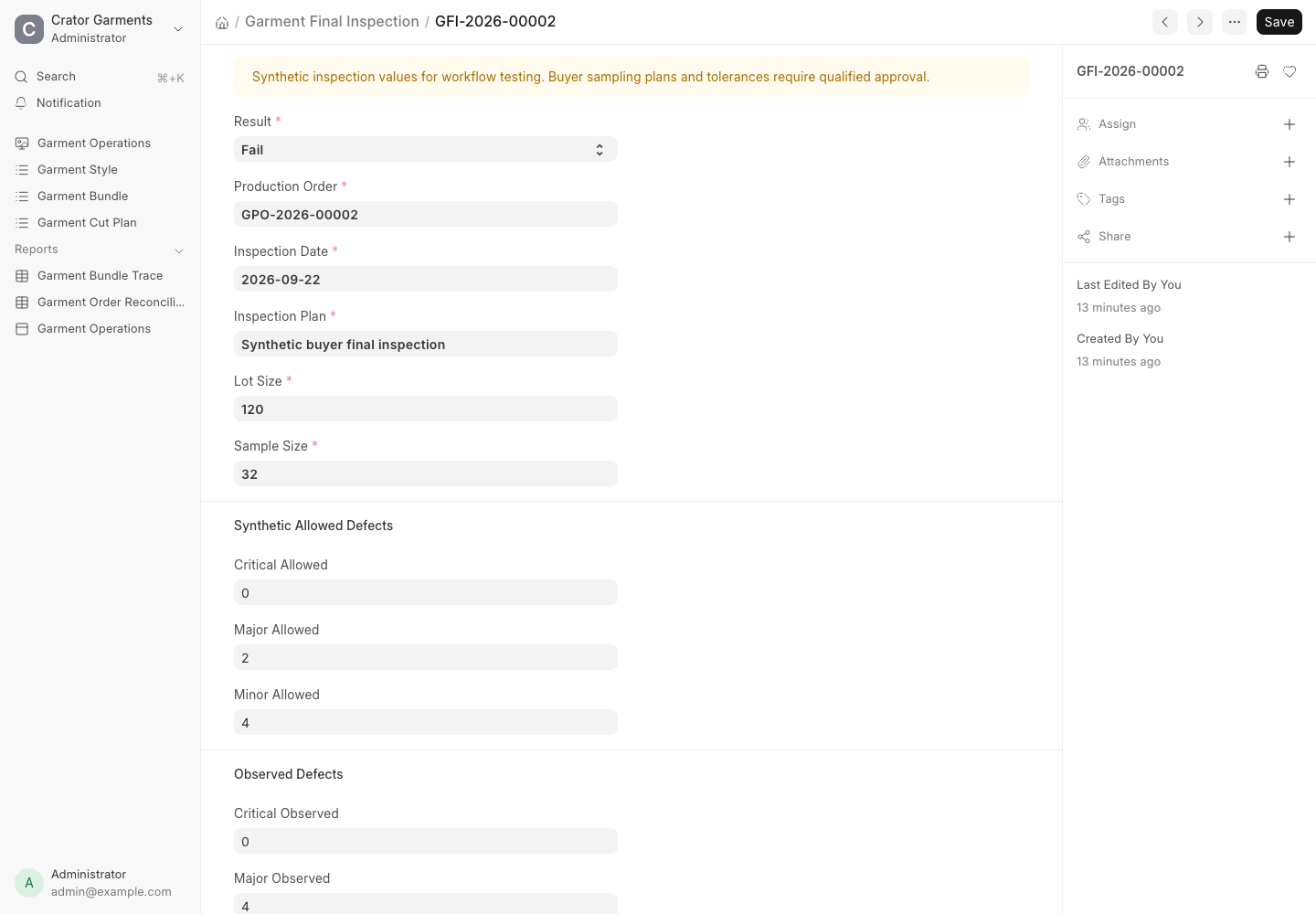
We ran a separate 120-piece order through production and deliberately failed its final inspection. Four major defects were observed against a synthetic limit of two. The garment order moved to Quality Hold, packed quantity stayed at zero, and the system created neither a Delivery Note nor a Sales Invoice.
The software proves the control, not the sampling standard. Buyer inspection plans, defect classification, reinspection and release authority still need approval from the actual quality team.
Implementation
What Crator added to ERPNext
ERPNext supplies the commercial, manufacturing, stock, purchasing, delivery, accounting and quality foundation. Crator added the garment operating layer and its validations as an installable Frappe app, without changing ERPNext core.
One garment operating system
ERPNext foundation
- Sales Order and six sellable Items
- BOM, Work Order and Stock Entry per SKU
- Purchase Order and supplier
- Quality Inspection
- Delivery Note and Sales Invoice
Crator garment layer
- Style and buyer order matrix
- Fabric lot, marker and cut plan
- Bundle movement by colour and size
- Outside job-work reconciliation
- Final inspection shipping gate
For the broader system choice, read our guide to the best ERP options for manufacturing in India.
Production boundary
What still needs a real garment company decision
This is working garment manufacturing software, but it is not a claim of production readiness. A rollout still needs the company's tech-pack structure, buyer approval stages, BOM consumption, marker rules, size sets, operation bulletin, line balancing, barcode or RFID method, subcontracting documents, sampling plans, GST configuration, print formats and user acceptance testing.
The reference model uses standard ERPNext records for Items, bills of material, Work Orders and subcontracting. GS1's product identification guidance also treats each size and colour combination as a distinct trade item. These references inform the data model; they do not certify the synthetic implementation for a real factory.
Frequently asked questions
It connects the buyer purchase order and style to size-colour SKUs, bills of material, cutting, bundles, internal production, outside job work, inspection, packing, delivery and invoicing. The useful trace runs from each order row to the production and commercial records created for it.
Yes. ERPNext already provides Items, variants, BOMs, Sales Orders, Work Orders, Stock Entries, Purchase Orders, Quality Inspections, Delivery Notes and accounting. Crator adds the garment-specific records and controls that connect those documents to the style, size-colour matrix, cut plan, bundles, job work and final inspection.
Each sellable size and colour combination is its own SKU. The buyer order matrix keeps ordered, cut, good, rework, rejected and packed quantities visible for every combination instead of reducing the order to one total style quantity.
Yes. The reference build links an outside embroidery batch to an ERPNext Purchase Order, supplier, sent quantity, received good quantity, damage, shortage and disposition. A production rollout would adapt this to the exact challan, subcontracting, barcode and supplier-update process used by the factory.
It is a working reference implementation built with Crator on ERPNext, not a fictional customer case study. We can hand over the app and adapt it, but buyer approvals, sampling plans, machine and scanner integrations, tax rules, print formats and operating controls still need decisions from the real garment company.