ERP for corrugated packaging in India
We used Crator to build a working packaging ERP reference on ERPNext for a corrugated box plant. It follows one synthetic 10,000-box order from the approved box specification and paper allocation through production, quality, pallets, delivery and invoicing. The screens below come from the installed ERP, not a design mockup.
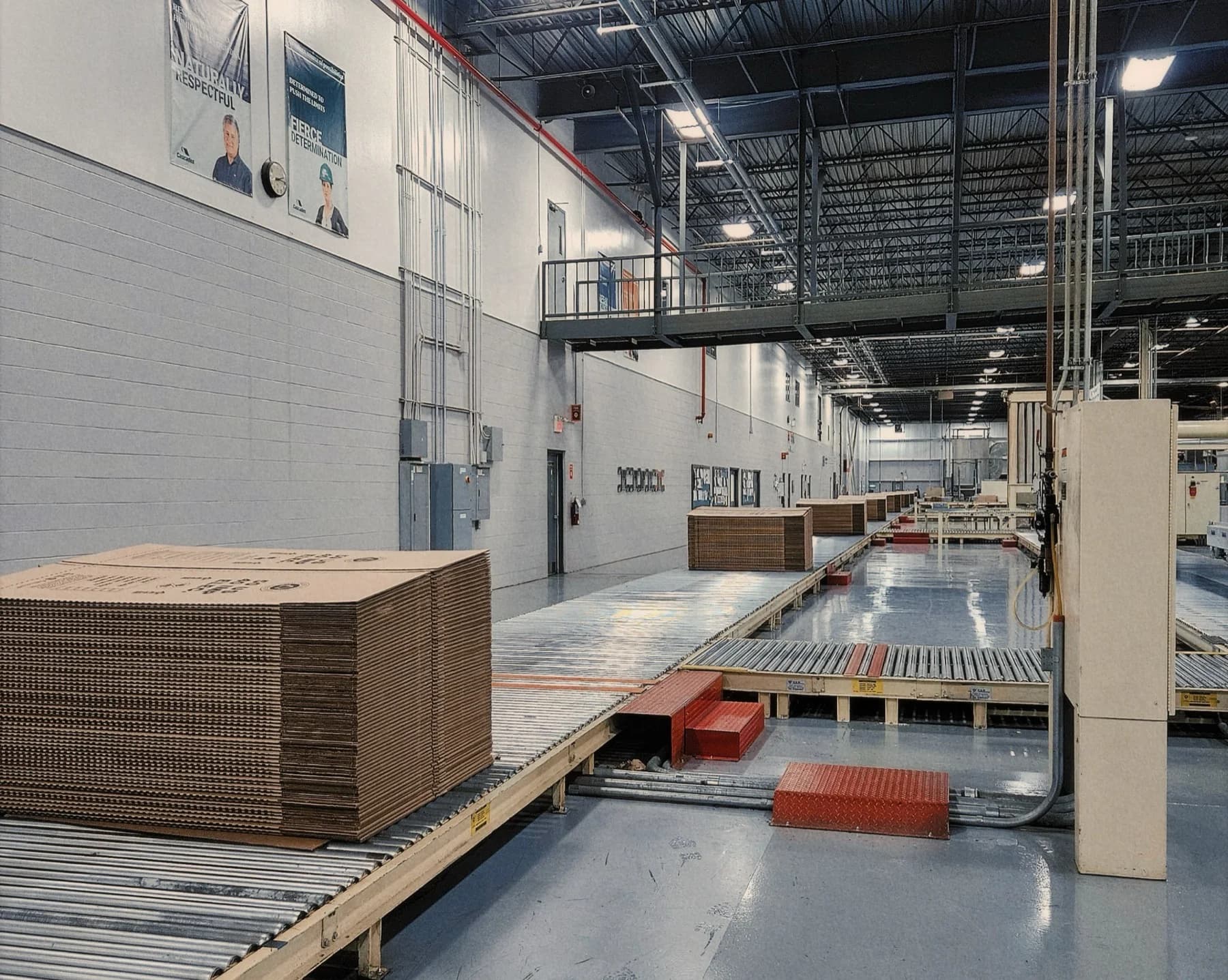
Why packaging ERP has to begin with the box specification
A corrugated order is not only a finished Item and quantity. Its dimensions, box style, board construction, artwork and material combination determine what has to run through the corrugator and converting line. Packaging ERP software has to keep that engineering revision attached to the commercial and production records.
The approved box revision controls production
FEFCO style, internal dimensions, board construction and artwork revision need one approved identity. Changing any of them should create a new revision, not silently rewrite a released job.
Paper demand is a reel allocation problem
Outer liner, fluting medium and inner liner have different grades and reel identities. The job must show what was required, allocated, consumed or short before release.
Run yield must explain every blank
Good output, rework and permanent reject need to reconcile to the input at each run. The order cannot hide conversion loss inside one finished-goods total.
Finished pallets carry the trace to delivery
A pallet identity connects its boxes to the specification, manufacturing receipt, quality release and Delivery Note. That is the usable answer when a customer asks which production record supplied a shipment.
Crator added those corrugated records as a separate Frappe app. ERPNext remains the source of truth for sales, BOMs, manufacturing, stock, quality, delivery and accounts.
Specification and paper
The job cannot drift away from the approved engineering revision
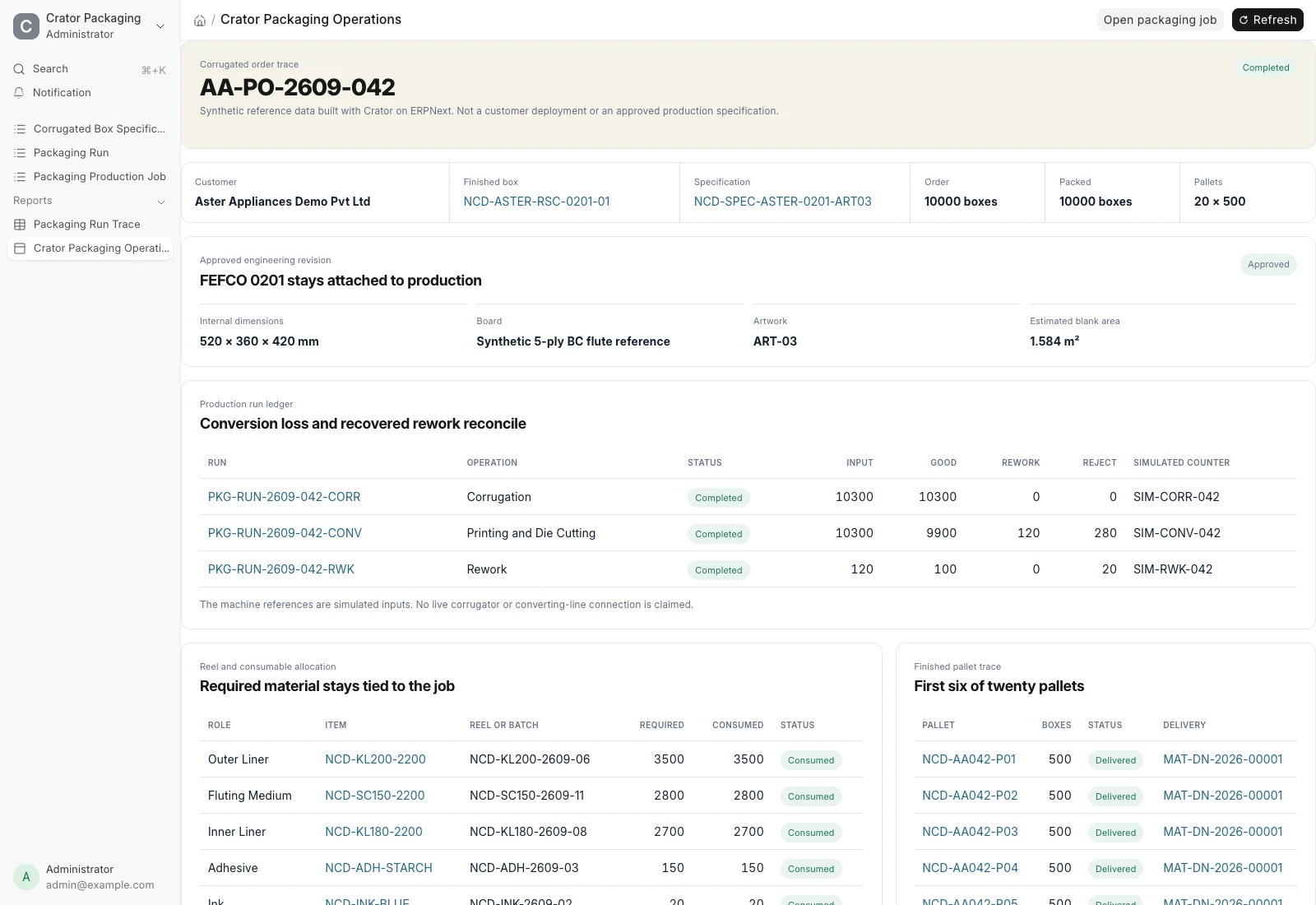
The reference order uses a synthetic FEFCO 0201 regular slotted container with internal dimensions of 520 × 360 × 420 mm, a reference five-ply BC construction and artwork revision ART-03. The approved fields become immutable, so a dimensional or artwork change requires a new revision.
Its BOM uses standard ERPNext Items for outer liner, fluting medium, inner liner, adhesive and ink. The packaging allocation records add the job-specific reel or batch references and preserve shortages separately from consumption.
Production and quality
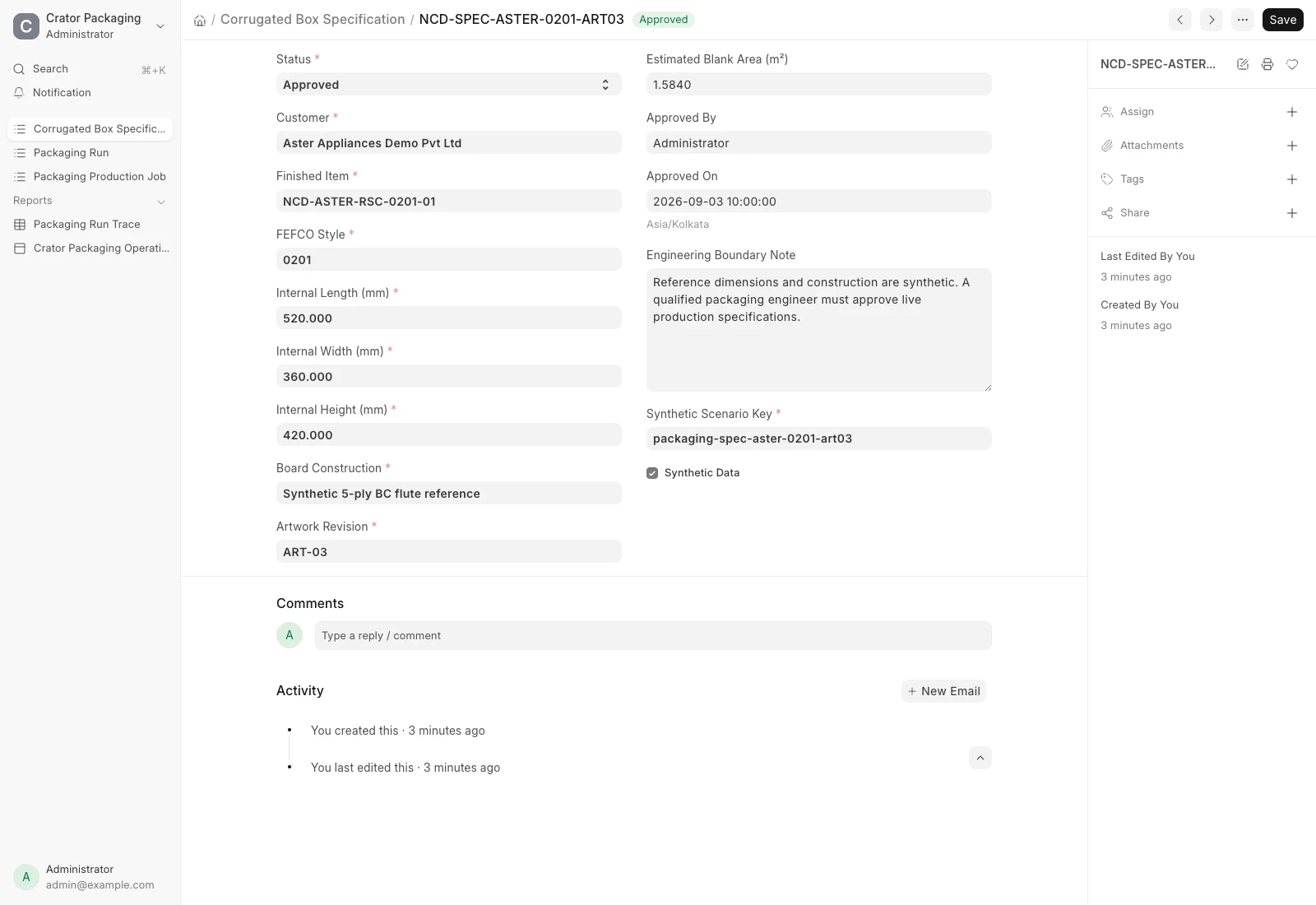
10,300 blanks become 10,000 accepted boxes without losing the explanation
The converting run records 9,900 direct-good boxes, 120 for rework and 280 rejected from 10,300 inputs. The rework run recovers 100 and rejects 20. The final accepted quantity is 10,000, while permanent non-good output remains 300. The custom run ledger and the standard ERPNext manufacturing receipt agree on the accepted finished quantity.
Machine-counter references on this screen are simulated. No live corrugator, flexo folder gluer, die cutter or laboratory connection is represented by the reference build.
Pallet and dispatch trace
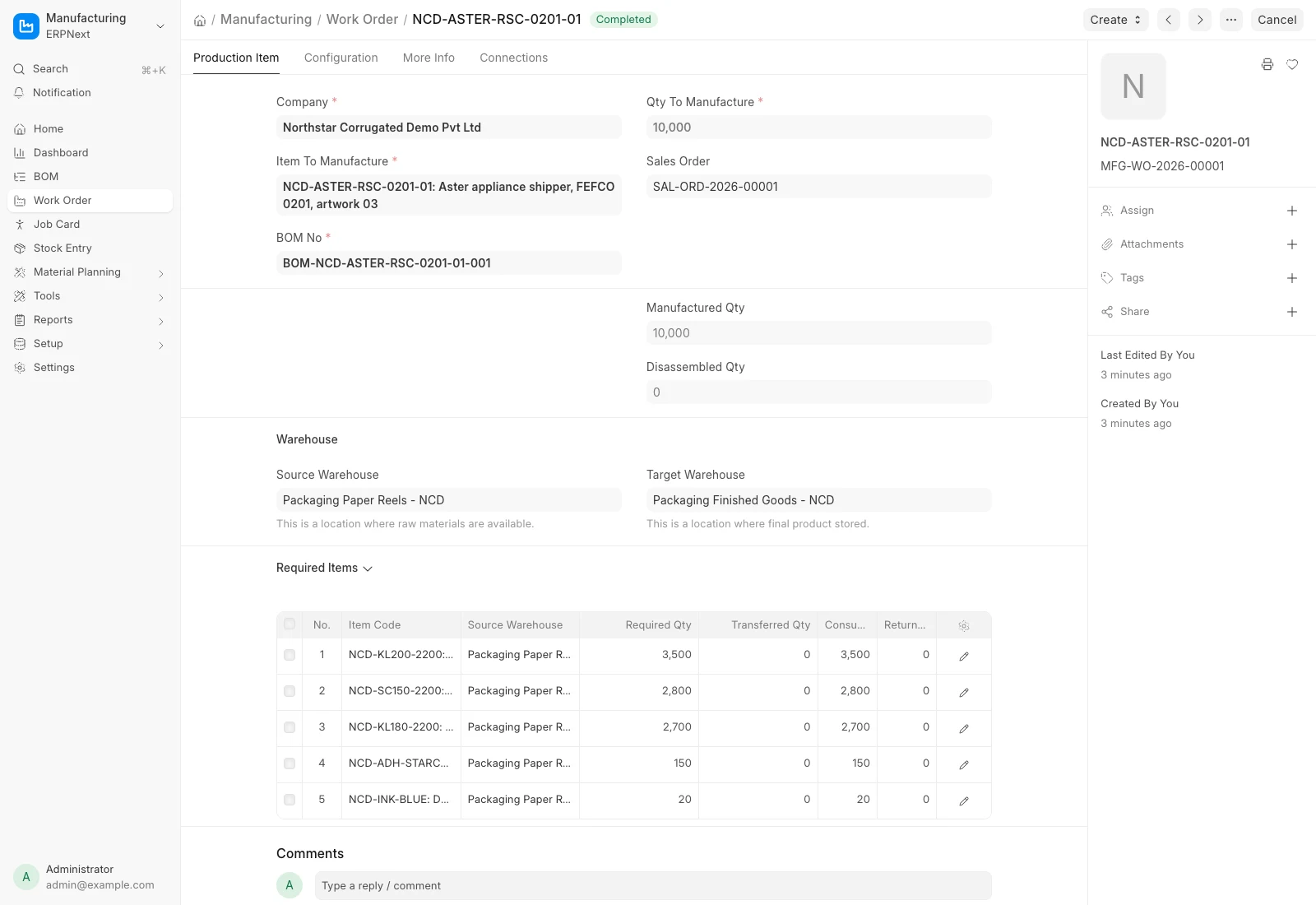
Twenty pallets connect finished stock to the customer delivery
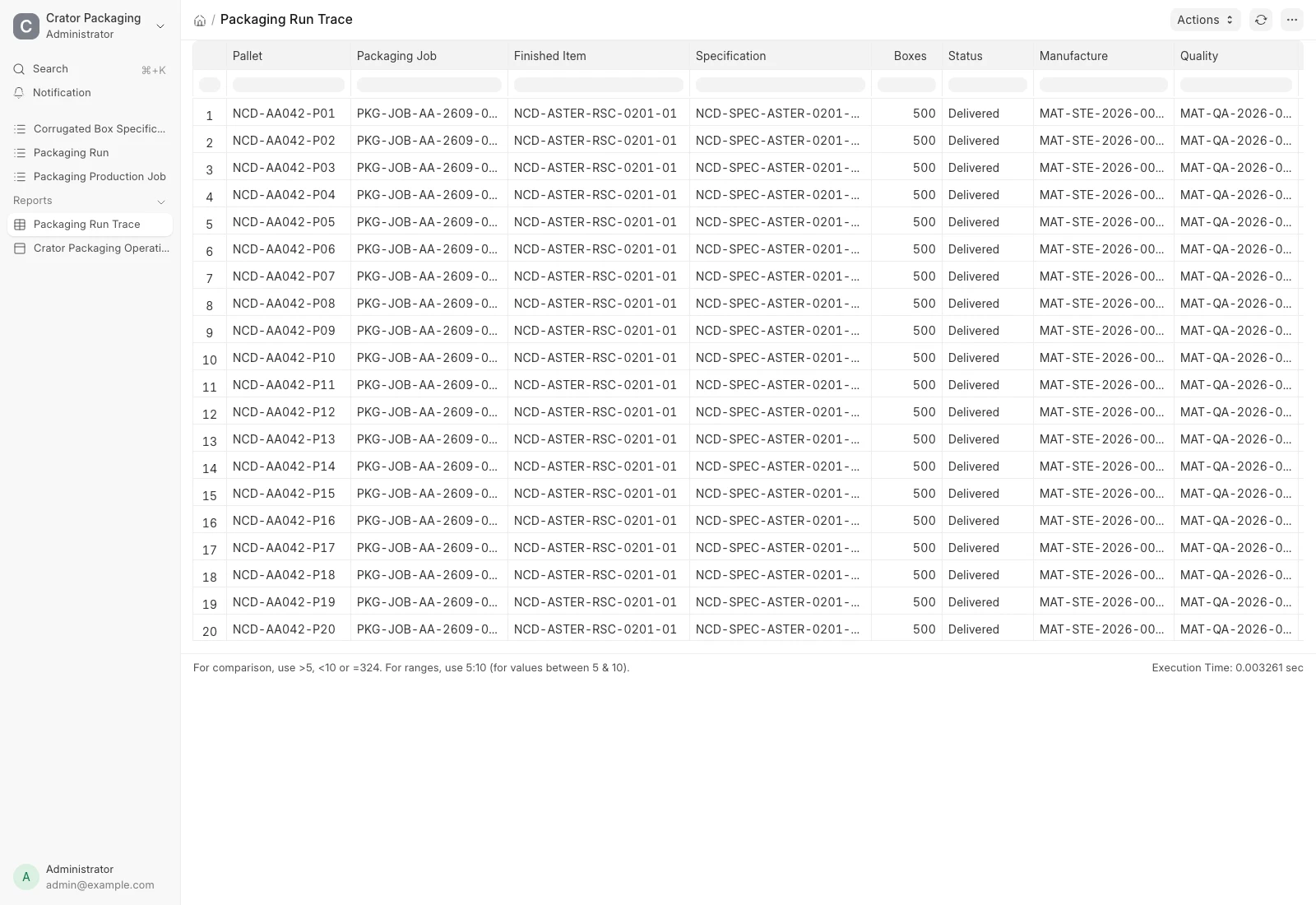
The reference build creates twenty pallet identities with 500 boxes each. Every pallet points back to the finished Item, approved specification, manufacturing Stock Entry, Quality Inspection and Delivery Note.
This is the operational trace a packaging manufacturer needs when dispatch totals are correct but a customer question is specific to one pallet or production receipt.
Material exception
A short outer-liner reel stops release before production starts
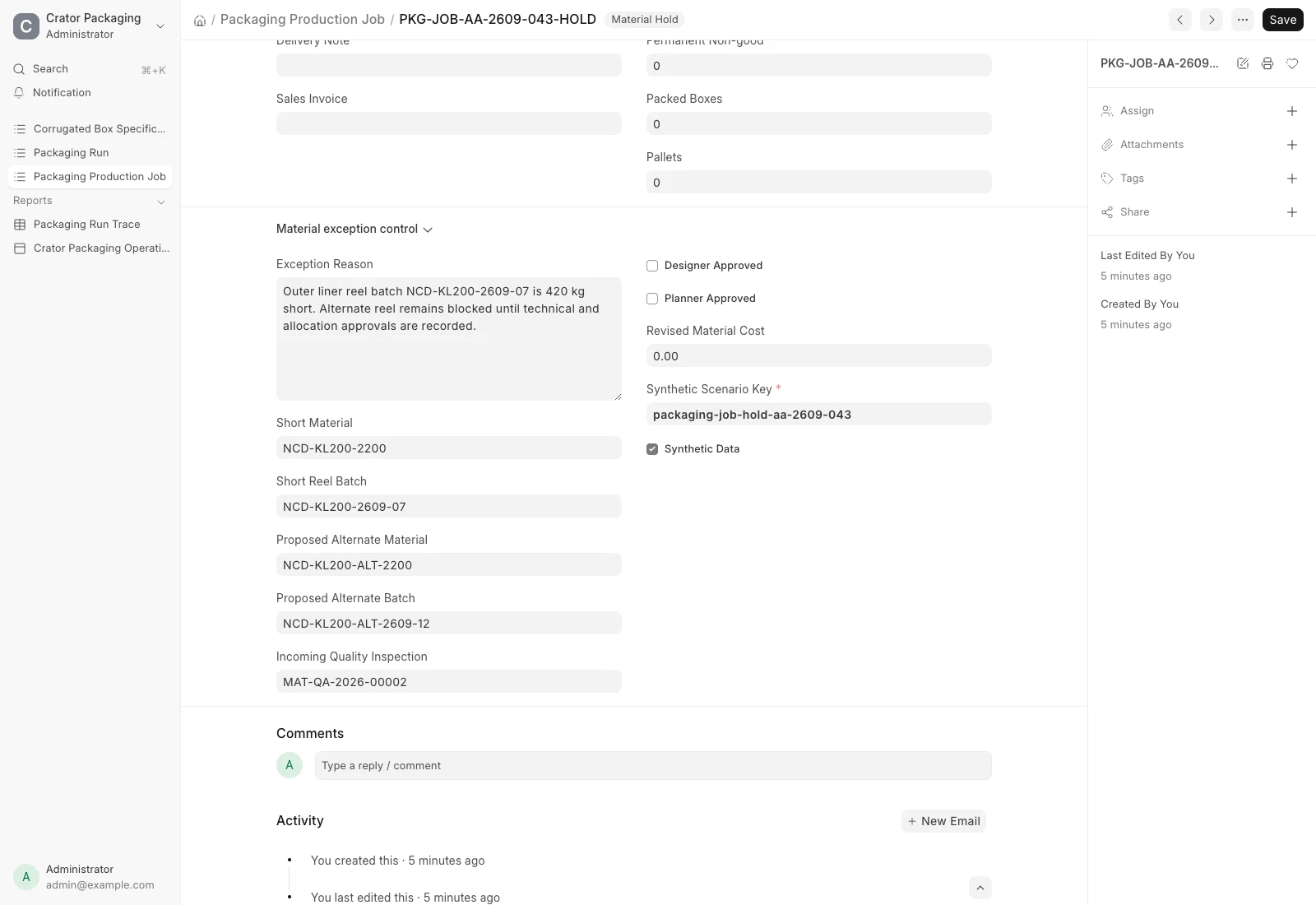
A separate synthetic 2,000-box order is 420 kg short on its selected outer-liner reel. The job remains on Material Hold. An alternate reel has an accepted incoming sample, but the system still blocks release until both the packaging designer and planner approve the substitution and its cost effect.
The held job has no Work Order, Delivery Note or Sales Invoice. The control therefore changes downstream behaviour instead of merely adding an alert after the commercial transaction has already closed.
Implementation
What Crator added to ERPNext
ERPNext supplies the commercial, manufacturing, stock, quality, delivery and accounting foundation. Crator adds the corrugated packaging operating layer as an installable Frappe app without changing ERPNext core.
One corrugated packaging operating system
ERPNext foundation
- Customer, Item and Sales Order
- BOM, Work Order and manufacturing Stock Entry
- Paper and consumable stock transactions
- Quality Inspection
- Delivery Note and Sales Invoice
Crator packaging layer
- Approved corrugated box specification
- Job-level reel and consumable allocation
- Run output, rework and reject reconciliation
- Reel substitution approval gate
- Finished pallet trace
The workflow model uses the FEFCO production process and box-code system as industry context. ERP capabilities are mapped to standard ERPNext documents. The order, parties, quantities, material grades, dimensions, rates, inspection values and machine references shown here are synthetic. This is not a customer deployment or an approved production specification.
For a broader software comparison, read our guide to the best ERP options for manufacturing in India.
Frequently asked questions
For a corrugated box manufacturer, it should connect the customer order to the approved box specification, BOM, paper and consumable allocation, production runs, quality inspection, finished pallets, delivery and invoice. The useful trace explains both material consumption and every finished box quantity.
Yes. ERPNext already provides Items, BOMs, Sales Orders, Work Orders, Stock Entries, Quality Inspections, Delivery Notes and accounting. Crator adds the corrugated packaging records and controls for specification revision, reel allocation, run reconciliation, substitution approval and pallet traceability.
The reference build puts the packaging job on Material Hold when the selected outer-liner reel is short. An alternate item and reel can be proposed, but the job cannot release until the incoming Quality Inspection passes and both the packaging designer and planner record approval.
It can, subject to the interfaces available on the real equipment. This reference shows simulated corrugator and converting-line counter references only. A production rollout would validate PLC, machine counter, barcode, weighing and laboratory interfaces before claiming live integration.
It is a working reference implementation built with Crator on ERPNext, not a fictional customer case study. We can hand over and adapt the app, but production dimensions, board grades, costing, quality methods, tax rules, print formats and machine integrations still need decisions from the actual packaging company.