ERP for plastic manufacturing in India
We used Crator to build working plastic manufacturing software around an injection-moulding workflow. It follows a 60,000-piece customer order through the approved part revision, resin lots, mould and machine, per-cavity output, quality release, finished batch, delivery and invoice. The screens below come from the live ERP, not a design mockup.
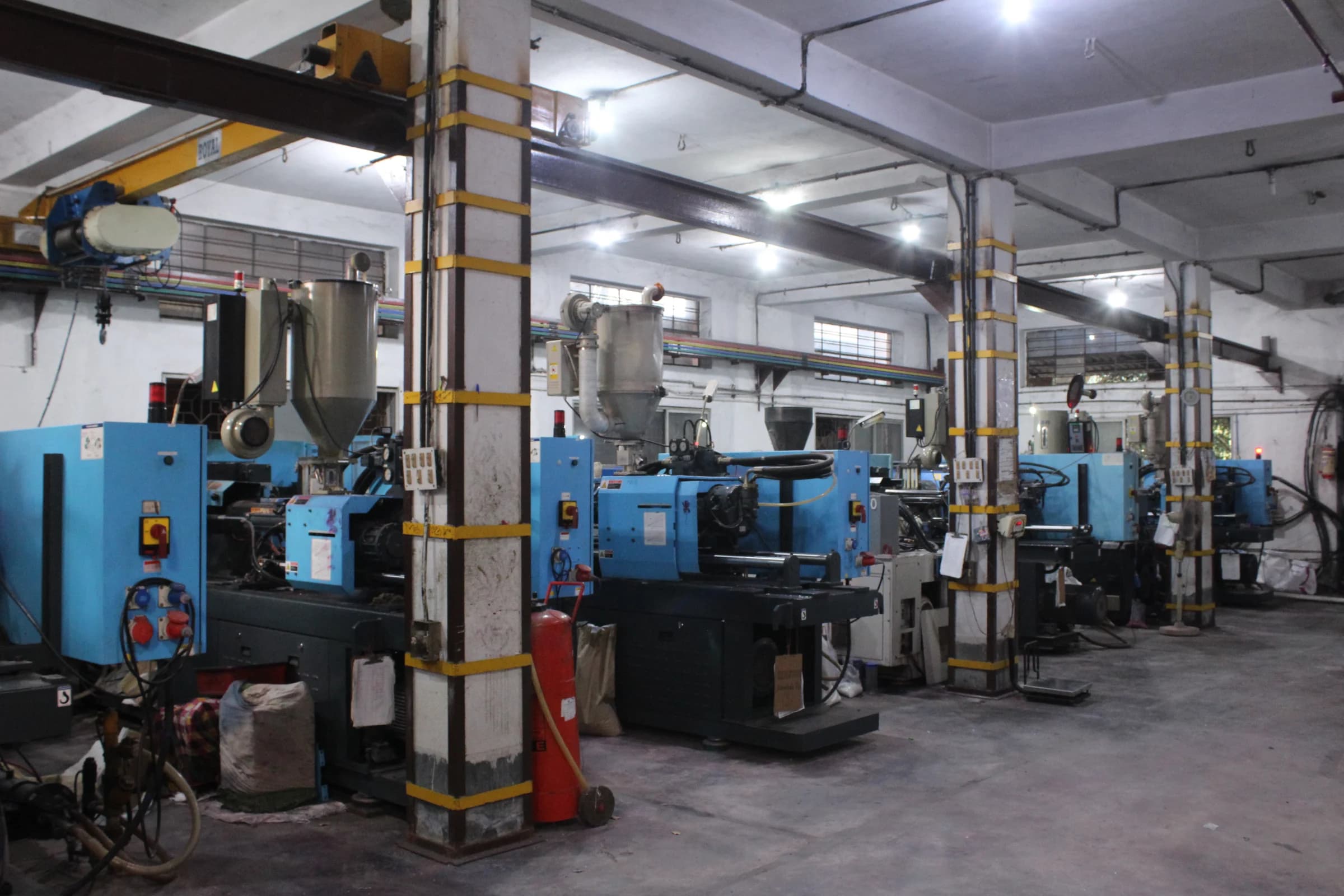
Why plastic manufacturing ERP has to follow the moulding batch
Injection moulding turns an approved part and material recipe into repeated cavity output. A useful ERP for the plastic industry has to preserve the part revision, resin lots, mould, machine and quality decision while standard manufacturing, stock, delivery and accounts continue to use normal ERPNext documents.
The approved revision controls what can run
Part weight, material grade, colour, BOM, mould, cavity count, machine and regrind limit belong to one approved specification. Production should not silently mix revisions.
Material lots need a finished-batch destination
The resin and masterbatch used in a run must remain connected to the manufacturing Stock Entry and the finished Batch that can later appear on delivery records.
Shots and cavities must reconcile to output
One machine total can hide a weak cavity. The batch should reconcile shots multiplied by active cavities into good pieces, rejects and retained samples, both overall and by cavity.
Quality release controls commercial release
A failed cavity check should hold the affected output before delivery and invoicing. The quality record, hold warehouse and commercial documents must tell the same story.
Crator added those injection-moulding records as a separate Frappe app. ERPNext remains the source of truth for the customer order, BOM, Work Order, stock movement, finished Batch, Quality Inspection, delivery and accounts.
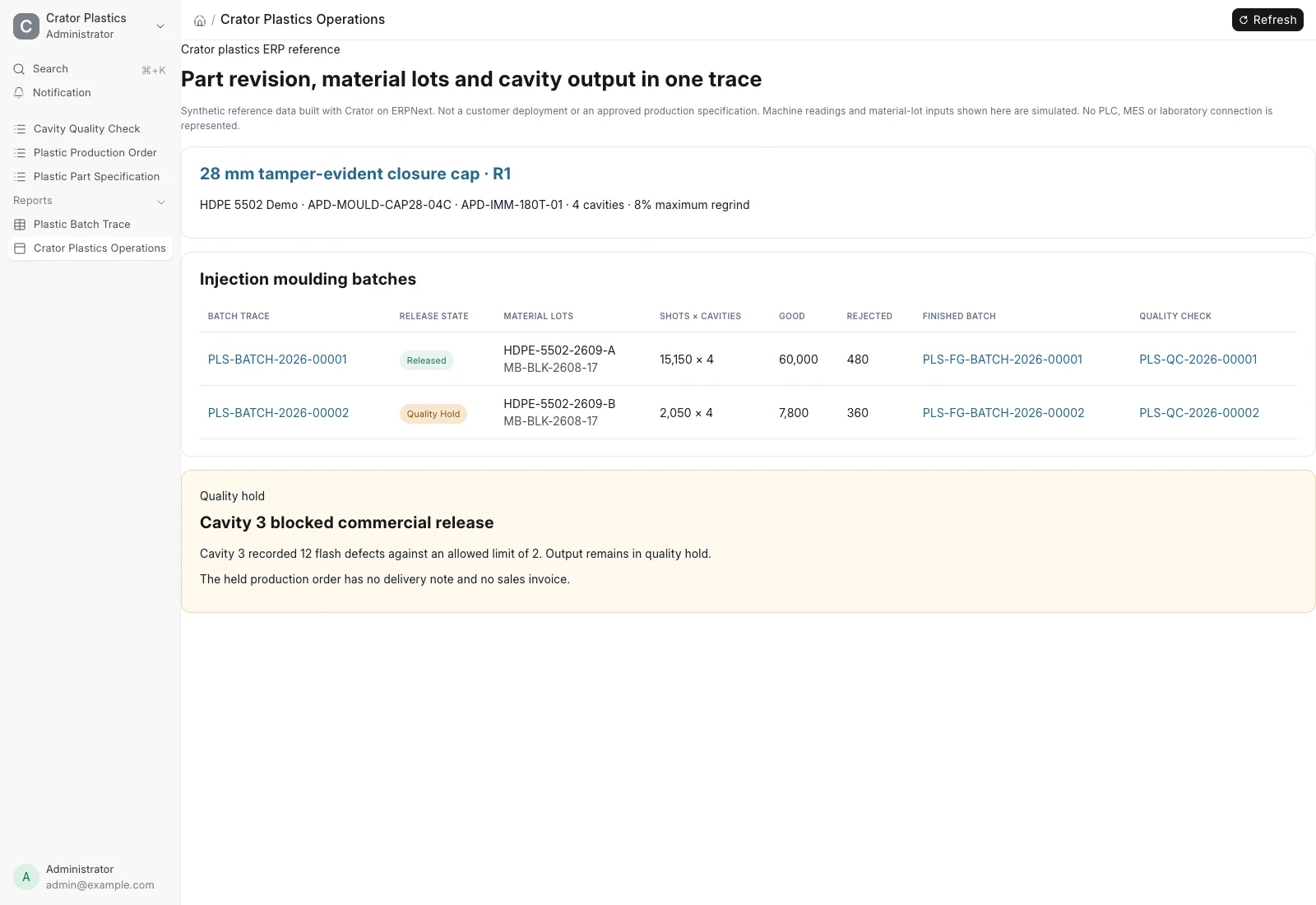
Part revision
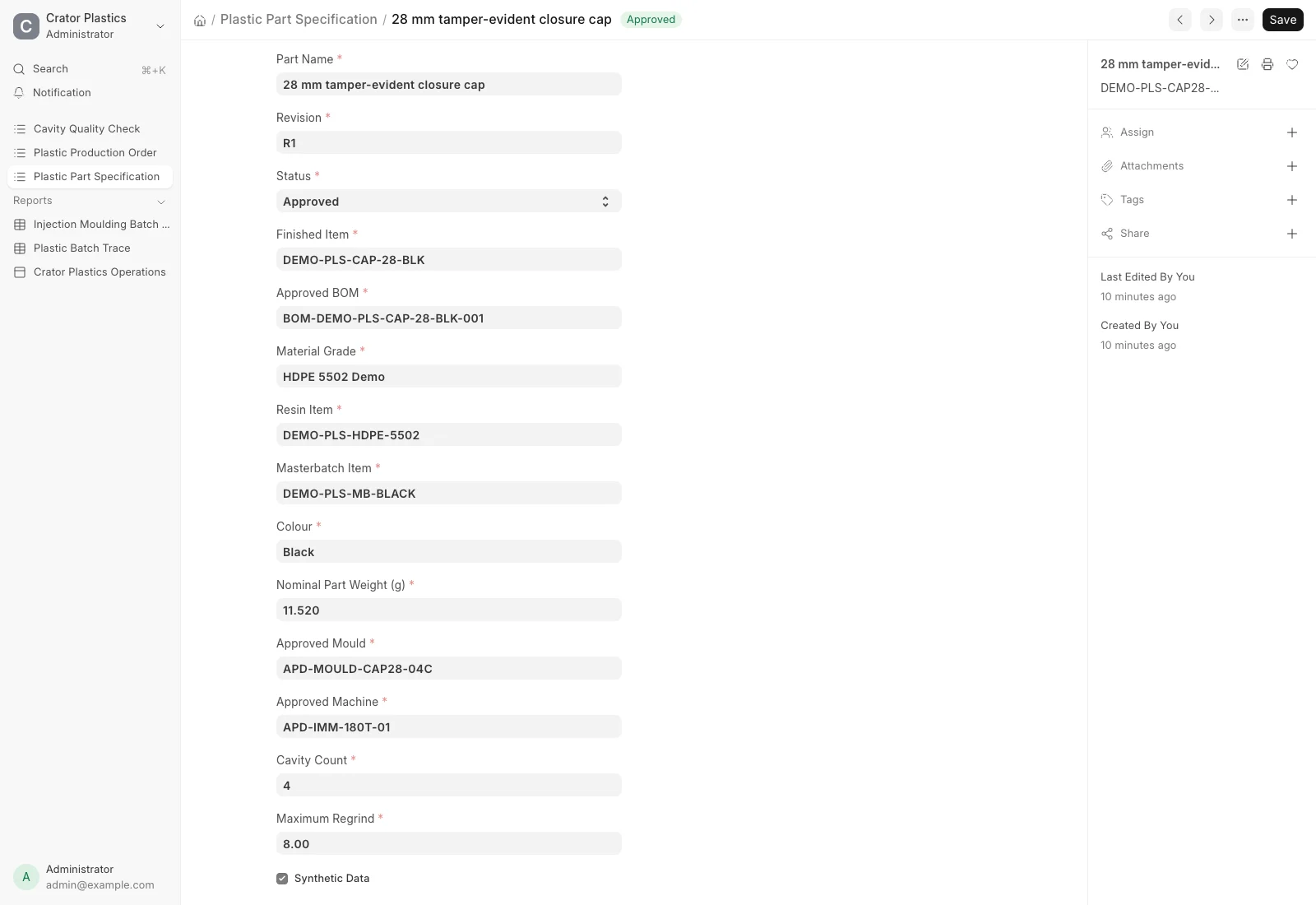
The recipe starts with an approved part specification
The reference part is a 28 mm black closure cap. Revision R1 connects the finished Item to its ERPNext BOM, HDPE 5502 material grade, black masterbatch, nominal 11.52 g weight, four-cavity mould, approved 180-tonne machine and an 8% maximum regrind limit.
These are synthetic demonstration values, not an engineering recommendation. In a real plant, authorised engineering and quality teams would approve the drawing, resin grade, colour standard, process window, sampling plan and change-control path.
Batch trace
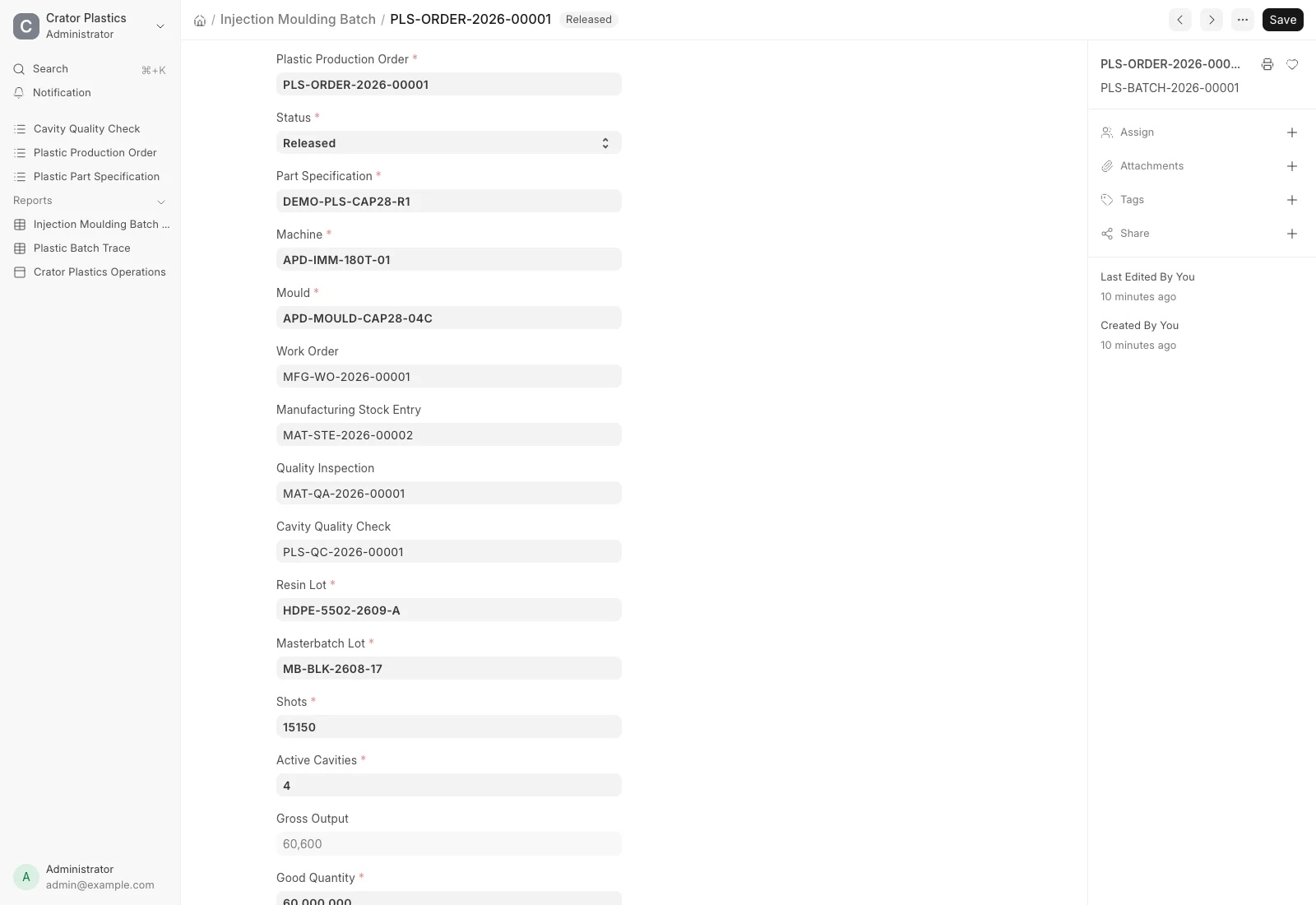
15,150 shots become 60,600 traceable pieces
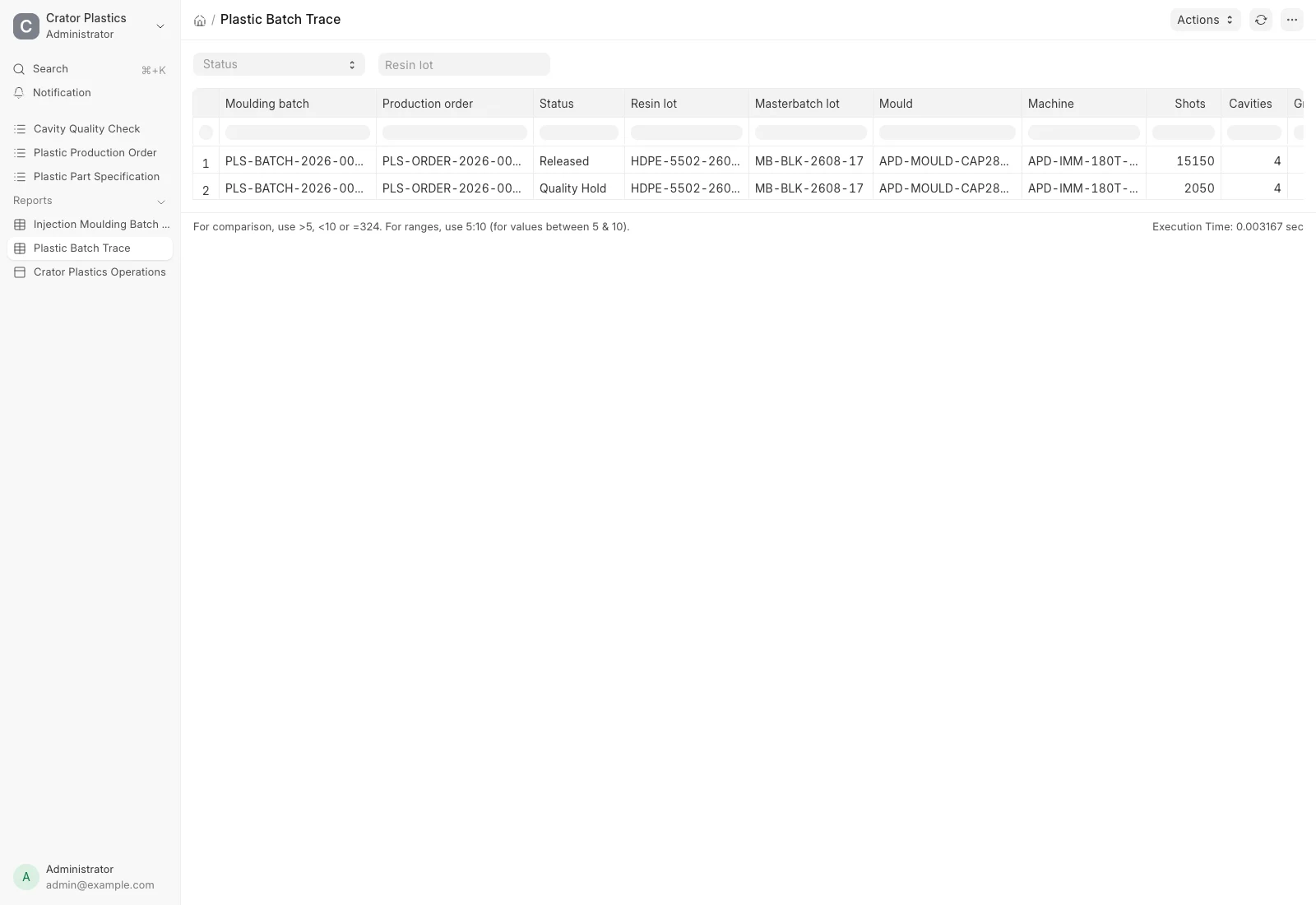
The released run records 15,150 shots across four active cavities. Its 60,600 gross pieces reconcile into 60,000 good caps, 480 rejects and 120 retained samples. Each of the four cavity rows accounts for its share of that output.
The moulding record links resin lot HDPE-5502-2609-A and masterbatch lot MB-BLK-2608-17 to the ERPNext Work Order, manufacturing Stock Entry, Quality Inspection and automatically generated finished Batch. Delivery and invoicing are created only after release.
Quality gate
Cavity 3 cannot quietly become a delivery
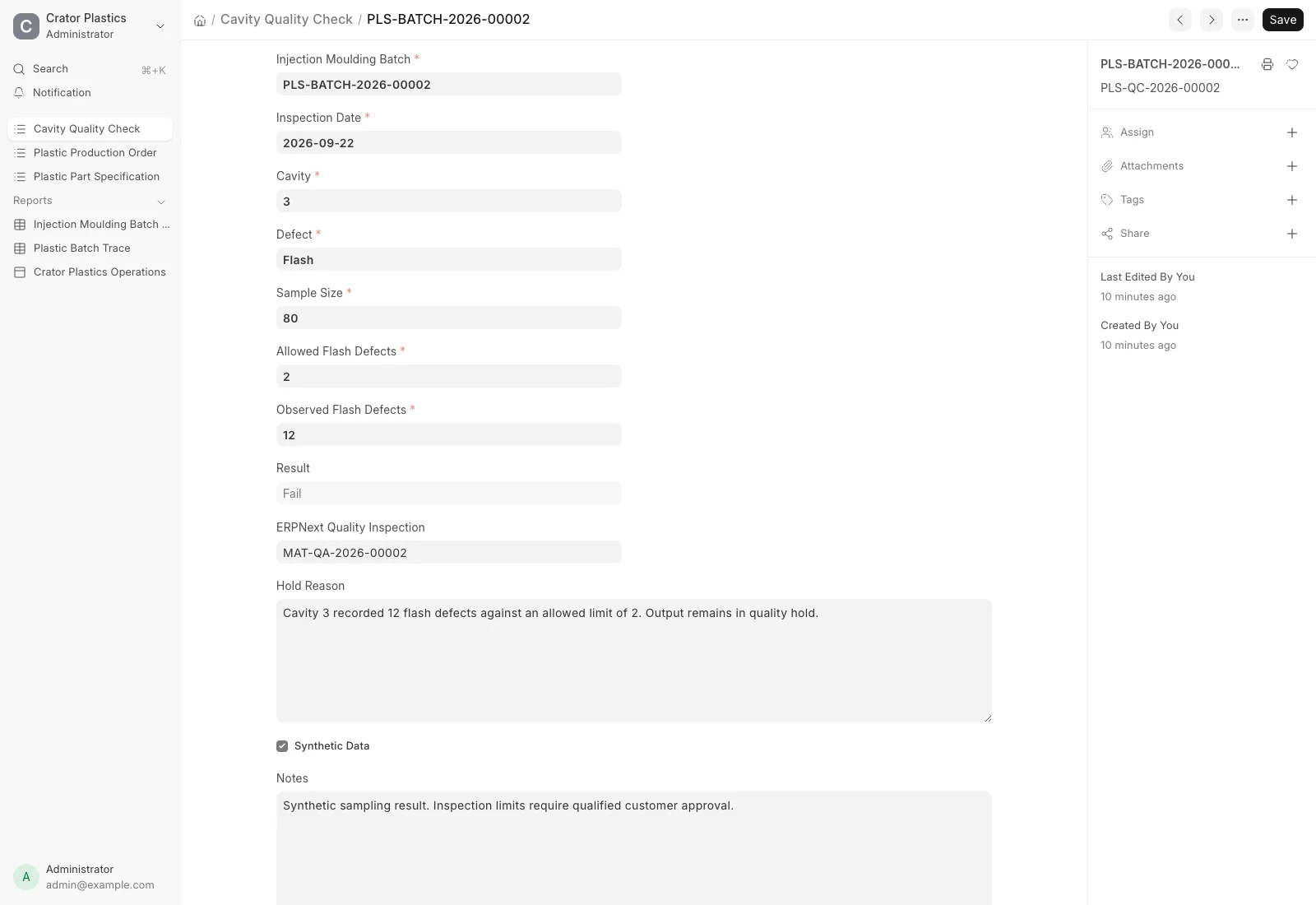
We ran a separate 8,000-piece order through the same app and deliberately recorded 12 flash defects for cavity 3 against a synthetic limit of two. The moulding batch and production order moved to Quality Hold, and its finished output stayed in the hold warehouse.
The held order has no Delivery Note and no Sales Invoice. The software proves that the gate works. It does not decide the correct inspection limit, corrective action or release authority for a real component.
Implementation
What Crator added to ERPNext
ERPNext supplies the commercial, manufacturing, stock, batch, delivery, accounting and quality foundation. Crator added the injection-moulding operating layer and its validation rules as an installable Frappe app, without changing ERPNext core.
One plastic manufacturing system
ERPNext foundation
- Customer, Sales Order and finished Item
- BOM, Work Order and manufacturing Stock Entry
- Finished Batch and Quality Inspection
- Delivery Note and Sales Invoice
Crator plastics layer
- Approved part and material revision
- Resin and masterbatch lot trace
- Mould, machine and shot record
- Per-cavity output reconciliation
- Cavity-quality commercial release gate
For the broader software decision, read our guide to the best ERP options for manufacturing in India.
Production boundary
What still needs a real plastics company decision
This is working plastic manufacturing software, but it is not a claim of production readiness. A rollout still needs approved part masters, resin and regrind rules, mould maintenance, machine assignments, shift and downtime logic, barcode design, inspection plans, non-conformance workflow, controller connectivity, GST configuration, print formats, permissions and user acceptance testing.
Machine readings and material-lot values in the reference are simulated. There is no live PLC, MES, gravimetric feeder, barcode, laboratory, GST or statutory integration. Those interfaces need plant-specific mapping, error recovery, audit ownership and qualified approval before production use.
The working reference uses standard ERPNext records for bills of material, Work Orders, Stock Entries and Batches. These sources describe the ERPNext foundation. They do not certify the synthetic values or the app for a real factory.
Frequently asked questions
For an injection-moulding company, it can connect the customer order to the approved part revision, resin and masterbatch, BOM, mould, machine, production shots, per-cavity output, finished batch, quality inspection, delivery and invoice. The useful trace should explain both what was planned and what each moulding batch actually produced.
Yes. ERPNext already provides Items, BOMs, Sales Orders, Work Orders, Stock Entries, Batches, Quality Inspections, Delivery Notes and accounting. Crator adds the plastic-specific records and validations that connect those documents to an approved part specification, material lots, the mould and machine, shot count, cavity reconciliation and quality release.
Yes. The reference build records the resin and masterbatch lot on each injection-moulding batch and links that record to ERPNext manufacturing and finished-batch documents. A production rollout would decide whether lot values come from purchase receipt labels, barcode scans, a gravimetric system or another approved source.
Yes, after the controller, protocol and required event mapping are confirmed. This reference displays simulated barrel temperature, injection pressure and cycle time. It does not claim a live PLC, MES or machine-controller integration. A production connector needs machine-specific mapping, retries, timestamp rules and failure handling.
The separate exception run records good, rejected and retained quantities by cavity. When cavity 3 exceeds the synthetic flash-defect limit, the moulding batch and production order move to Quality Hold. The output remains in the hold warehouse and the order has no Delivery Note or Sales Invoice.
It is a working reference implementation built with Crator on ERPNext, not a fictional customer case study. We can hand over and adapt the app, but approved recipes, mould maintenance, machine connectivity, sampling limits, release authority, barcode design, GST configuration and user acceptance still need decisions from the real manufacturer.