Frappeverse keynote: Raven V3 rebuilds work chat for the Frappe stack
· Shrivardhan Goenka · 6 min read · Updated
This article is part of our Frappeverse Mumbai 2026 recap, which covers all nine keynotes.
Raven began as a practical answer to an annoying SaaS bill: why keep paying per seat when some teammates barely send a message? Three years later, the work-chat app has more than 1,000 active sites on Frappe Cloud. At Frappeverse Mumbai 2026, it officially became part of Frappe's product stack.
Raven V3 is more than an organizational change. Frappe rebuilt the frontend, addressed the performance problems in V2 and added the everyday tools that make a chat app dependable: useful search, notifications that preserve their read state, reminders, scheduled messages and read receipts.
The V3 beta was released on the day of the keynote. The full release was scheduled for September 1.
From incubator project to official Frappe app
Nikhil Kothari, Frappe's director of products, traced Raven back to its original idea: a work-chat app connected to ERPNext and other Frappe applications. That connection is becoming its clearest advantage.
Complete Auto Sales, a car dealership and loan provider in Kansas City, uses Raven to share repair orders and stock items. The conversation retains an audit trail and appears in the relevant ERPNext timeline, so the business record and the discussion around it stay connected. KBP Civil, an Indian company with field-service teams, uses Raven to automate ToDo reminders for people working away from a desk.
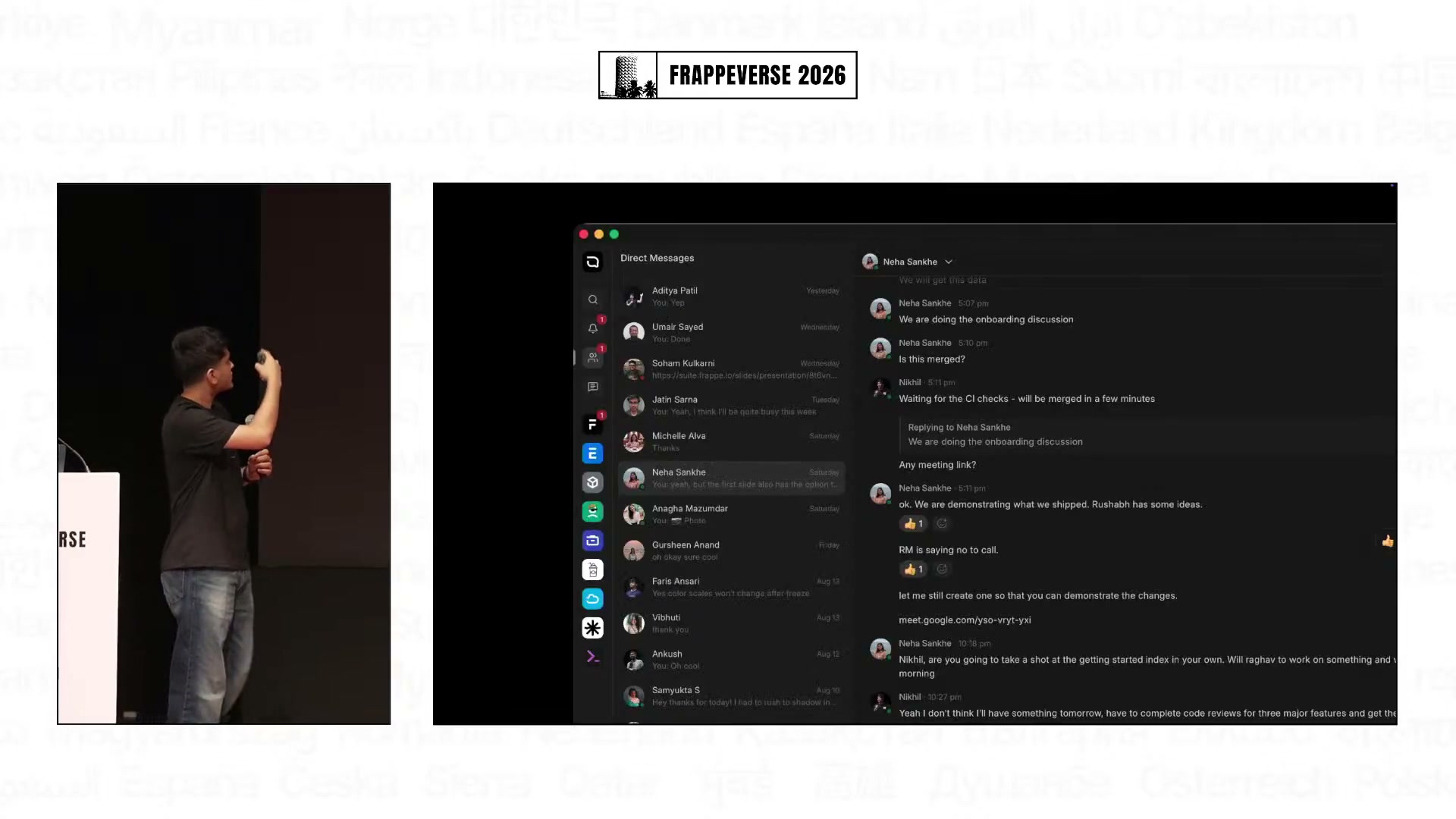
Frappe has adopted Raven internally as well. Nikhil said the company now sends roughly 28,000 messages through it every month. Those examples matter because they place Raven somewhere more useful than the crowded category of Slack alternatives: it can bring communication into the same open-source system where a company already runs its operations.
V3 formalizes that direction. Raven has moved into the Frappe GitHub organization, and customers can receive support through the Frappe Cloud support portal.
A frontend rebuilt for speed
The previous version had a straightforward problem for a chat app: it did not always feel fast or reliable. The V3 team discarded the old frontend and rebuilt it around Frappe's Espresso design system.
The new interface gives direct messages their own section instead of hiding them among channels. Each channel has a place to browse its shared files and links, while links from Frappe properties receive previews that match the wider product design. Raven now looks more at home beside the other applications in the Frappe stack.
Performance was treated as a feature during development. Nikhil said the team kept a frame-rate counter visible from the beginning, investigated drops below roughly 110 frames per second and removed the scroll jank users had encountered in V2. The onstage channel-switching demo was fetching data from a server rather than running against a local copy.
The mobile strategy is more restrained. Frappe spent roughly three months on a React Native app before dropping that effort and concentrating on a progressive web app that feels closer to a native mobile experience. The keynote showed the resulting mobile interface, while remaining candid that browser and operating-system limits still shape what a PWA can do.
Search moves beyond SQL LIKE
Aditya Patil, an engineer at Frappe, showed how Raven rebuilt search after V2's whole-table SQL LIKE query proved slow and returned results without useful relevance ranking.
V3 uses Frappe Framework's new SQLite-powered full-text search. Results are ranked by relevance, include misspelling checks and can search the titles and descriptions of shared links rather than only their URLs. The search page uses a split view, keeping results beside the conversation so a user can inspect what they found without repeatedly leaving the chat.
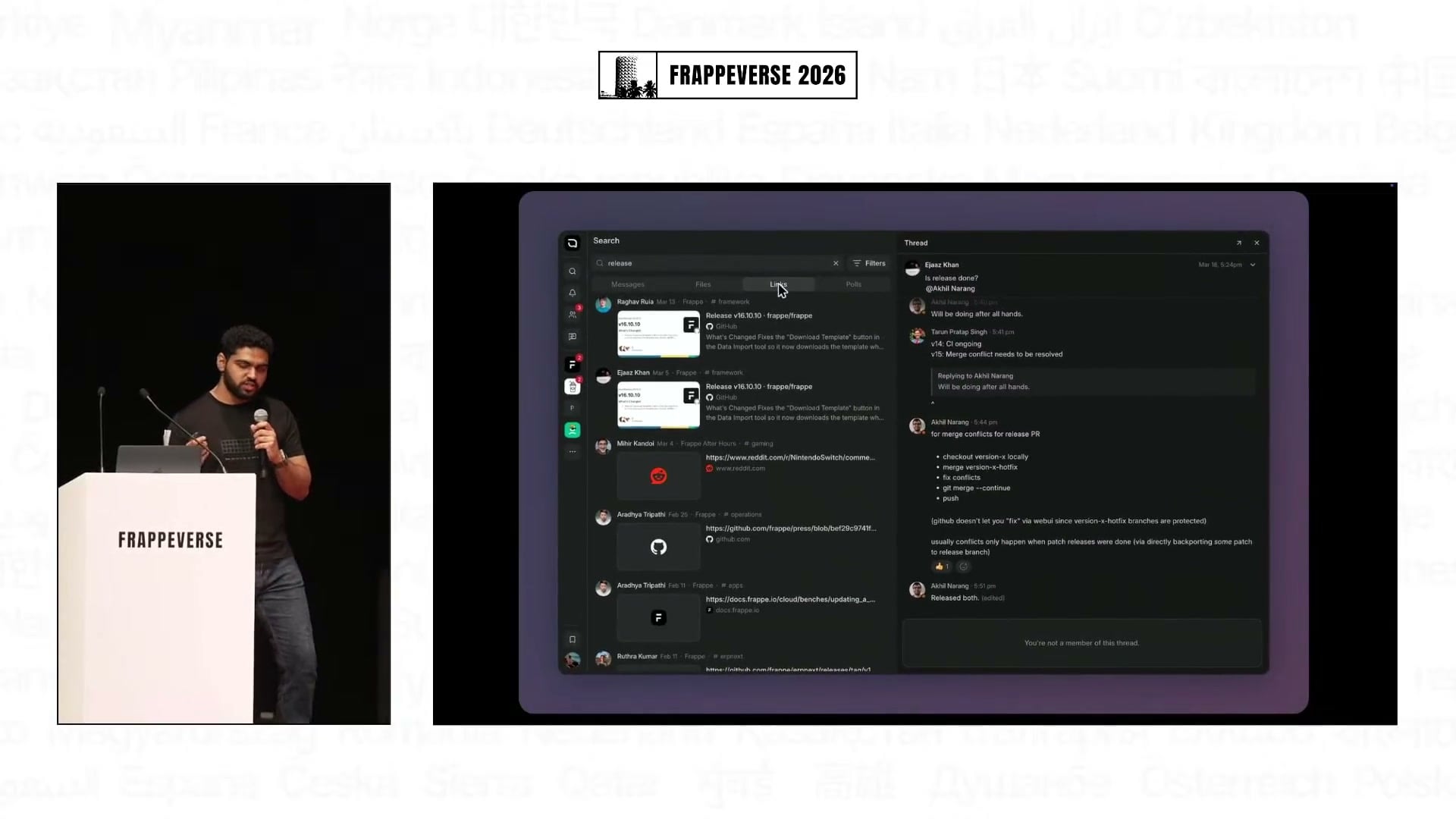
This is a good example of Raven benefiting from its place in the wider Frappe stack. A Framework capability improves the messaging app, while Raven gives that capability a demanding real-world workload.
Notifications that keep their context
Raven V2 placed mentions in a sidebar popover that cleared its entire unread count when opened, even if the user had not read the individual messages. V3 gives notifications a dedicated page and tracks each item independently.
The page includes mentions and reactions. Reading one notification clears only that notification, and encountering the underlying message while scrolling through a channel clears the matching alert. It is a small distinction, but it restores the basic promise of an unread counter: it should tell you what remains unseen.
The sidebar is also configurable per user. People can create channel groups, rearrange them, sort channels alphabetically or by recent activity, and hide channels they have not joined or that have gone quiet. Frappe is including those controls without placing them behind a separate paid tier.
Turning messages into work
Some of Raven V3's most useful additions are about what happens after a message arrives.
A message can now carry a reminder for a preset time or a custom date, along with a note. Reminders and saved messages collect in a new Later page, and a push notification appears when a reminder is due. The interaction stays close to the original conversation instead of asking the user to reproduce its context in another tool.
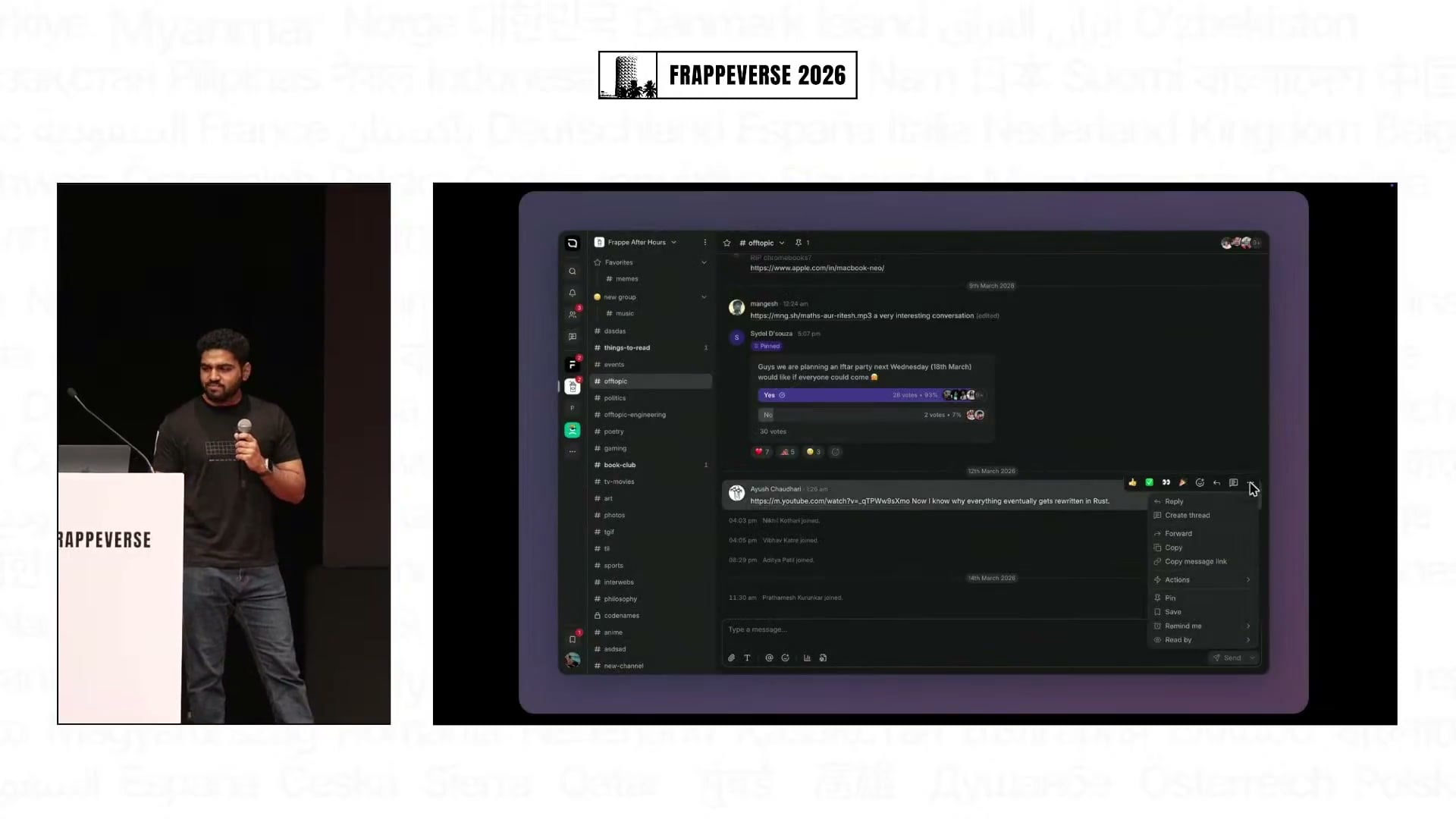
Scheduled send follows the same approach. Raven offers presets for later that day, the next day and, when relevant, the next working day. Scheduled messages remain visible in a queue where they can be revised or cancelled before delivery.
Read receipts are included too. Users can disable them in their preferences, with a reciprocal rule: if you turn off your own receipts, you cannot see receipts from other people. Raven also adds smaller quality-of-life changes such as marking a channel unread and moving channels between workspaces.
Beta now, with a clear line around what comes next
Frappe released the Raven V3 beta on August 21, the day of the keynote, and scheduled the full release for September 1. Voice notes, location sharing and contact sharing were described as coming soon rather than as part of the beta.
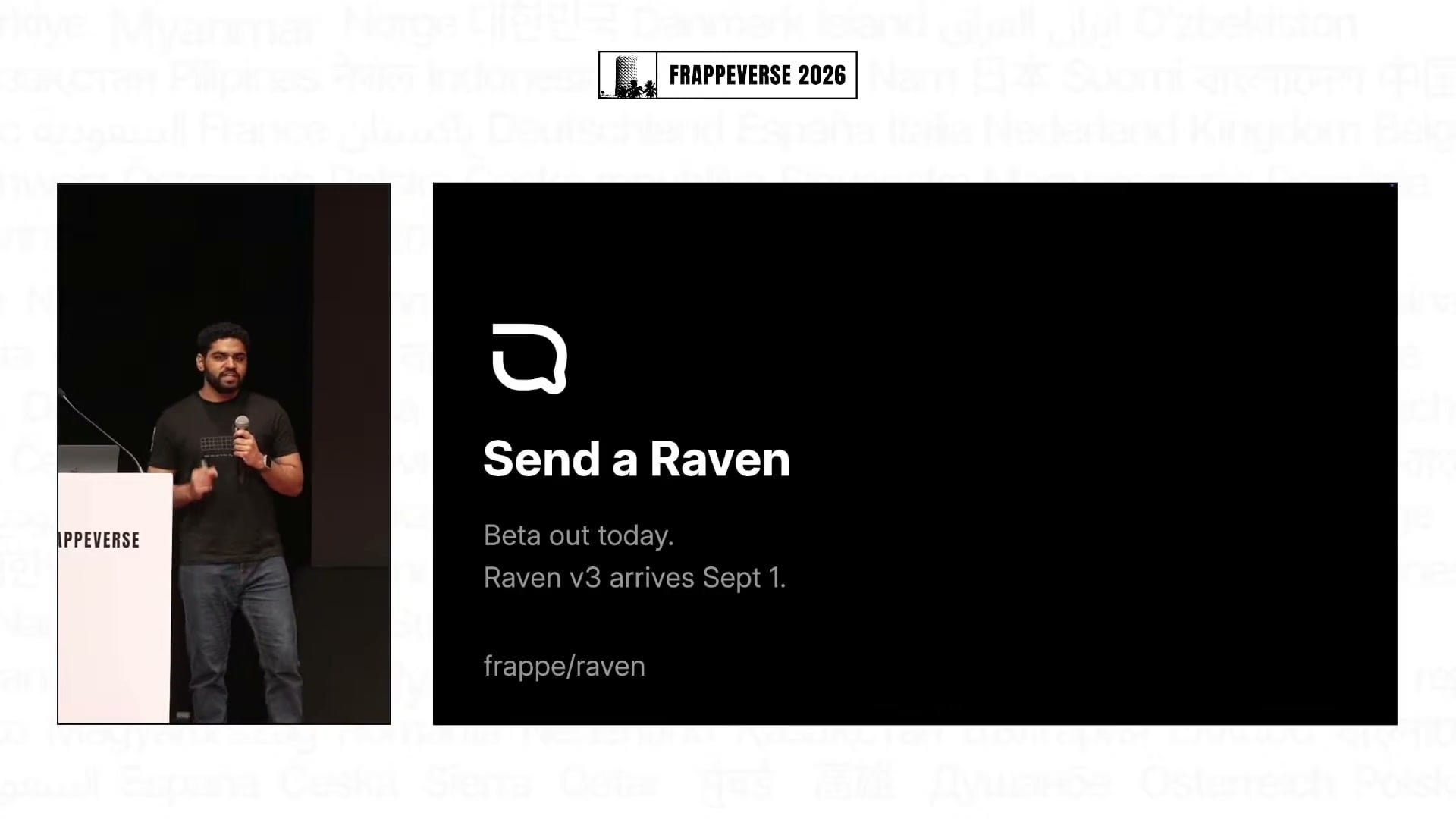
That distinction helps make the announcement credible. Raven V3 already has a rebuilt interface, a new search foundation and a more complete set of communication workflows, while the team is still clear about the work that remains.
Raven is becoming a supported communication layer for the rest of the Frappe ecosystem, keeping a conversation connected to the business record, reminder or workflow that made it necessary in the first place.
Watch the full Day 1 Track 1 livestream from the start of the Raven keynote