When ERPNext is the wrong choice
· Aarav Jhawar · 6 min read
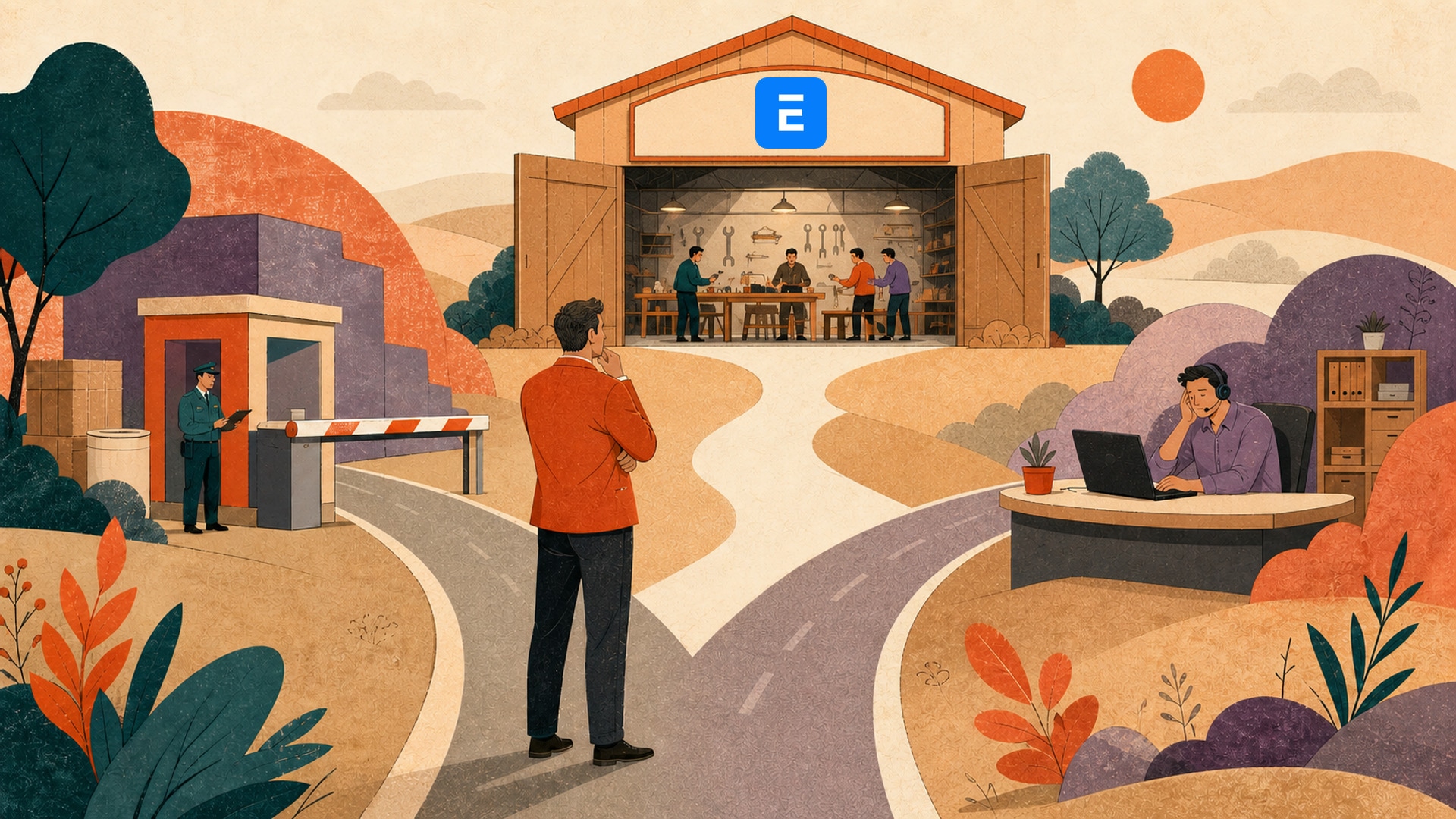
Crator is built around ERPNext. We like its open-source model, its Frappe foundation and the control it gives a business over its own system.
We would still tell some companies not to choose it.
An ERP sits inside invoicing, tax, inventory, payroll, purchasing and financial reporting. A missing statutory workflow or an ownerless implementation can do more damage than the freedom to customise can repair.
The most important ERPNext pros and cons are not abstract features. They are the conditions that decide whether the system can support this particular business responsibly.
ERPNext is our preferred foundation when it passes four tests: compliance, operational fit, ownership and implementation readiness.
1. Your compliance requirements are not covered
Compliance is the first gate because the rest of the evaluation does not matter if the system cannot produce the records your business is legally required to maintain.
ERPNext supports regional requirements through the core product and separate localisation applications. India Compliance, for example, adds GST, e-invoicing, e-way bills, TDS, TCS and India-specific reports. Australia has a localisation application for GST, BAS and ABA workflows.
Coverage is not uniform across every country. ERPNext's regional documentation lists resources for a limited set of markets and describes the wider area as work in progress.
Before selecting ERPNext, verify the exact requirement with the maintained application and a qualified local adviser. Check tax invoices, electronic filing, payroll, statutory reports, retention rules and any industry-specific controls.
If a dependable implementation does not exist, choose the product that covers your market. Building critical compliance from scratch is a serious software and legal commitment, not an ordinary ERP customisation.
2. You want a standard product and do not want to own change
Some businesses want an ERP that arrives with a prescribed operating model. They are happy to adopt the product's terminology, approvals and reports, and they prefer one vendor to decide how the application evolves.
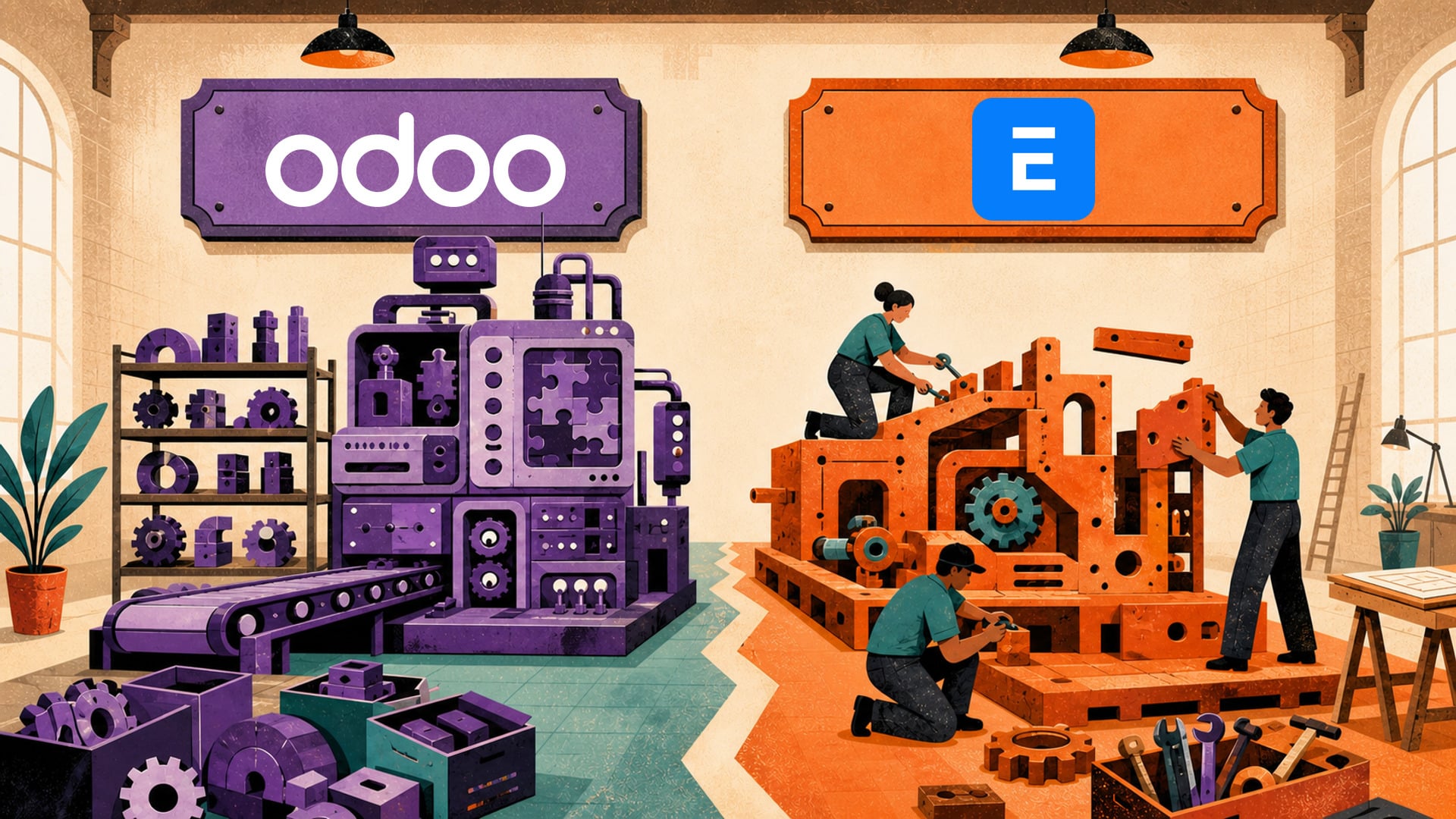
Odoo or Zoho ERP may fit that preference better. Both provide substantial configuration and customisation, but they remain commercial product environments with published plans, vendor roadmaps and conventional support routes.
If the decision has narrowed to two open and customisable systems, our ERPNext vs Odoo comparison sets out who should choose each one.
ERPNext's openness creates choices about hosting, applications, upgrades and deeper changes. Those choices are useful only when someone is willing to make them.
Crator reduces the technical work behind many decisions, but the business still needs to decide what a good process looks like. An AI agent should not invent accounting policy, approval authority or warehouse practice without an accountable owner.
3. Nobody inside the business will own the implementation
An ERP implementation cannot be outsourced completely.
A consultant can configure the system and migrate the data. They cannot decide which customer record is correct, who may approve a discount, how production handles shortages or whether an exception is legitimate.
The company needs one internal owner with enough authority to resolve those questions. A cross-functional group can support them, but a committee without an owner usually leaves every difficult decision for later. Our guide to ERPNext implementation with a consultant or in-house team explains how to keep that ownership inside the business while still using specialists well.
Do not choose ERPNext, Odoo, Zoho ERP or any other ERP until that owner exists. The product will otherwise preserve indecision in a more expensive database.
4. Your processes are still changing faster than you can describe them
ERPNext should encode a process only after the business understands it well enough to describe the rules and exceptions.
A young operation may still be learning how it prices work, purchases material or closes the month. Automating each temporary version creates a trail of fields and approvals that become obsolete before people learn them.
Keep using lighter tools until the repeated parts become visible. Our earlier guide on the signs that a business needs an ERP makes the same point from the other direction. ERP should remove complexity that already exists.
You do not need a perfect process. You need enough stability to tell the difference between an intentional exception and an unresolved argument.
5. You expect open source to mean free implementation
ERPNext has no per-user software licence. You can inspect the source, host it yourself and move between providers.
You still have to pay for infrastructure, migration, configuration, training, support and the people responsible for the system. Self-hosting adds backups, monitoring, security and upgrades to that list. Managed hosting such as Frappe Cloud pays for part of that operational work.
Open source changes what you own and what you are allowed to do. It does not clean an item master or reconcile an opening balance.
If the ERP budget contains only hosting, the implementation is not ready.
6. You need a guaranteed standard experience across every subsidiary
Some enterprises value central uniformity more than local flexibility. They want every subsidiary on a tightly controlled template, with changes moving through a global governance process.
ERPNext can support multiple companies and central controls, but its flexibility may be unnecessary if the organisation wants a rigid global template and already has the budget and team for a larger enterprise suite.
We still think a large company should evaluate ERPNext when it wants to own the application and has an internal technology team. Size alone does not disqualify it. The deciding factor is whether the organisation wants to exercise that control.
When we would recommend ERPNext with Crator
ERPNext becomes compelling after it clears the compliance gate and the company has an owner for the system.
We would recommend it when:
- important workflows differ from a standard ERP template;
- the company wants to avoid per-user ERP software licensing;
- an internal operations or technology team should control future changes;
- the business wants access to its application source and deployment;
- the system needs to improve continuously after go-live.
Crator lets that internal owner describe changes in plain language, review them on a separate ERPNext environment and publish them when they are ready. External specialists can still handle work that needs regulatory, migration or deep engineering expertise.
Our preference for ERPNext is strong because it is conditional. When compliance and ownership are present, the open-source foundation gives a business unusual room to build the system it needs. When either is missing, another ERP is the more responsible recommendation.