Frappeverse keynote: India Payroll and Lending bring compliance into the workflow
· Aarav Jhawar · 4 min read · Updated
This article is part of our Frappeverse Mumbai 2026 recap, which covers all nine keynotes.
Payroll localization decides whether software can run a real company. Provident Fund rules, state-level professional tax, labour-welfare deductions and quarterly filings all have to be correct. They also change what should otherwise be a straightforward payroll run.
At Frappeverse Mumbai 2026, Frappe engineering lead Deepesh Garg showed how India Payroll is absorbing more of that work into Frappe HR. He then carried the same idea into Frappe Lending, where regulatory documents, borrower acknowledgement, e-signing and identity checks are becoming part of the loan workflow.
The keynote’s direction was refreshingly practical: Indian compliance should be product behaviour, not a collection of formulas and external steps that every implementation has to rebuild.
India Payroll takes over the statutory rules
Before the India Payroll app, administrators had to model many statutory variations themselves. Garg used Provident Fund as an example. Supporting employees with and without PF could require separate salary structures; voluntary PF introduced another variation. Professional tax changed by state and, in some cases, employee gender. Maharashtra’s labour-welfare rules added more configuration.
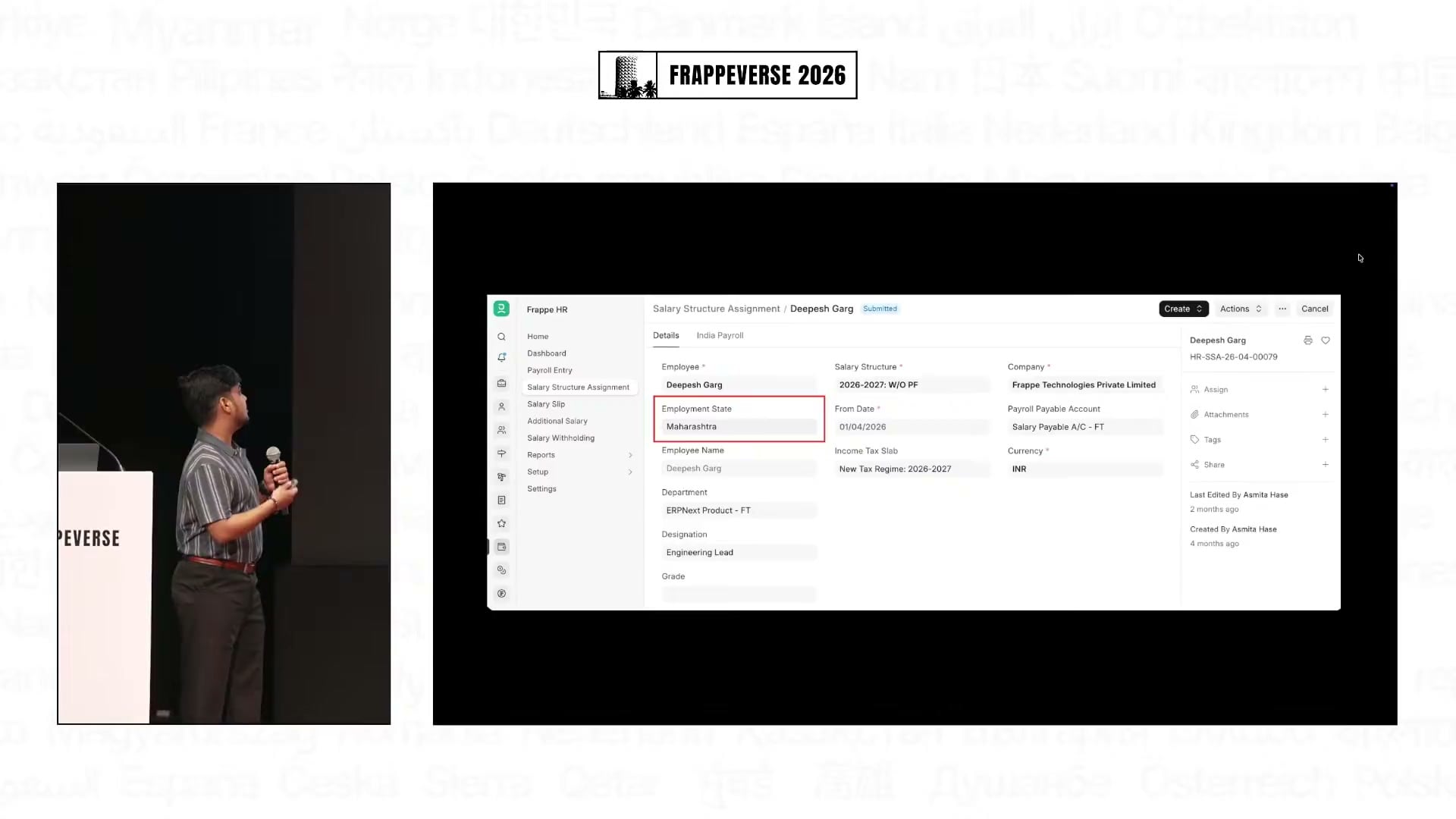
India Payroll now contains those rules. An administrator assigns an employment state, enables the relevant deductions in Payroll Settings and processes payroll. The app applies the statutory components that match the employee instead of asking the payroll team to maintain a growing collection of salary structures and formulas.
That is a meaningful improvement because the complexity has not disappeared; it has moved into a shared product where it can be maintained once. Payroll teams get a cleaner setup, while Frappe and its contributors have a clear place to update the rules.
Employees can compare tax regimes inside Frappe HR
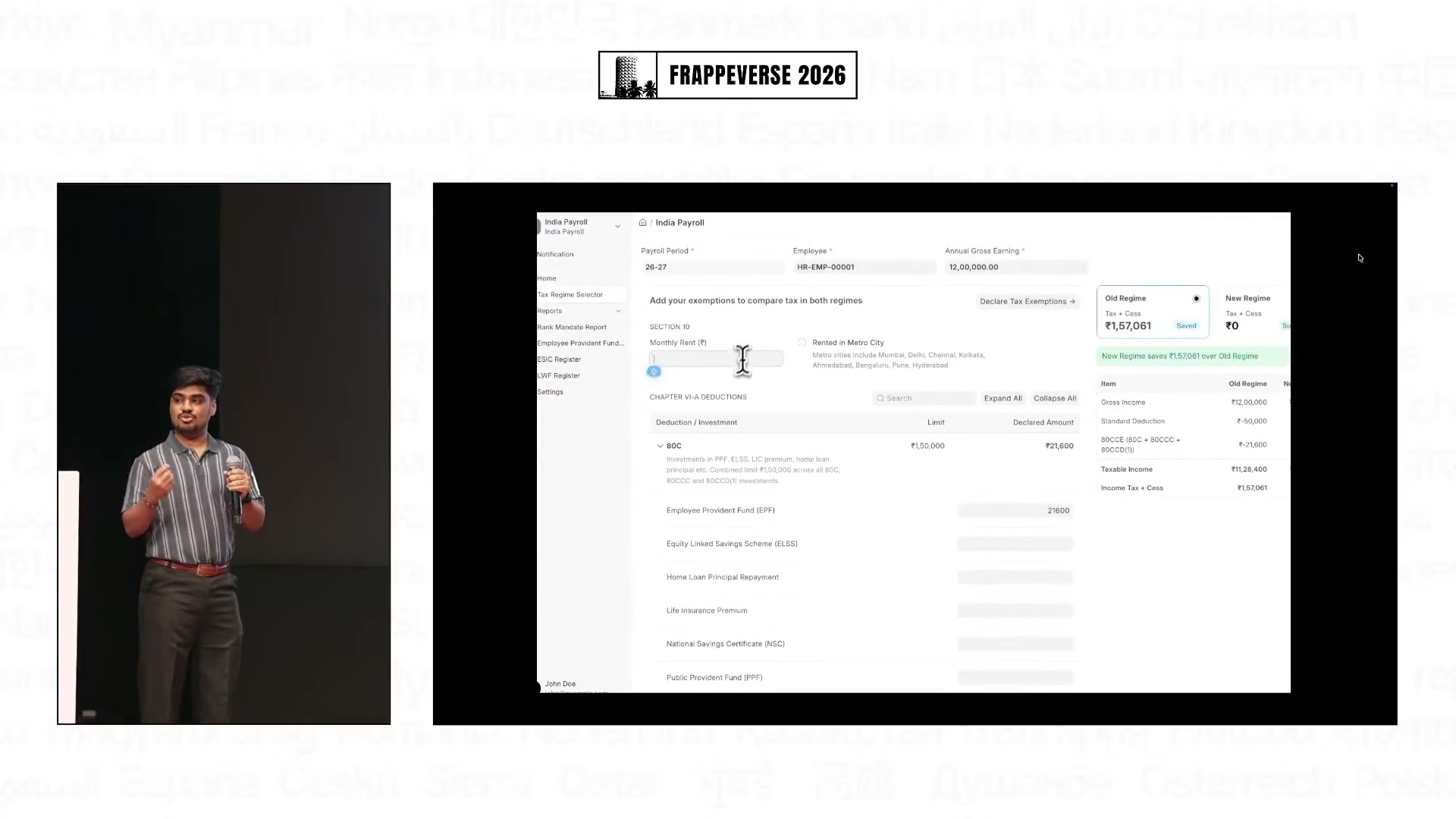
India Payroll also adds a tax-regime selector for employees. The app configures the income-tax slabs when installed, then lets an employee enter details such as rent and eligible deductions. A comparison panel calculates the tax under the old and new regimes and shows which option produces the better result.
Employees choosing the old regime can carry their declarations through the same interface. The feature, which Garg credited to Asmita Hase from Frappe’s HR team, turns a once-a-year decision into a workflow employees can understand without first recreating the calculation elsewhere.
Quarterly TDS returns move into Desk
The larger payroll announcement was quarterly TDS return filing from the Frappe HR Desk interface. Garg said the team had promised the feature by Frappeverse and had now delivered it.
The filing flow uses payroll data already stored in the system. It validates the return, flags errors and data that could lead to notices, generates the required text utility, runs the file-validation utility and completes filing. The final acknowledgement is stored at the end of the process.
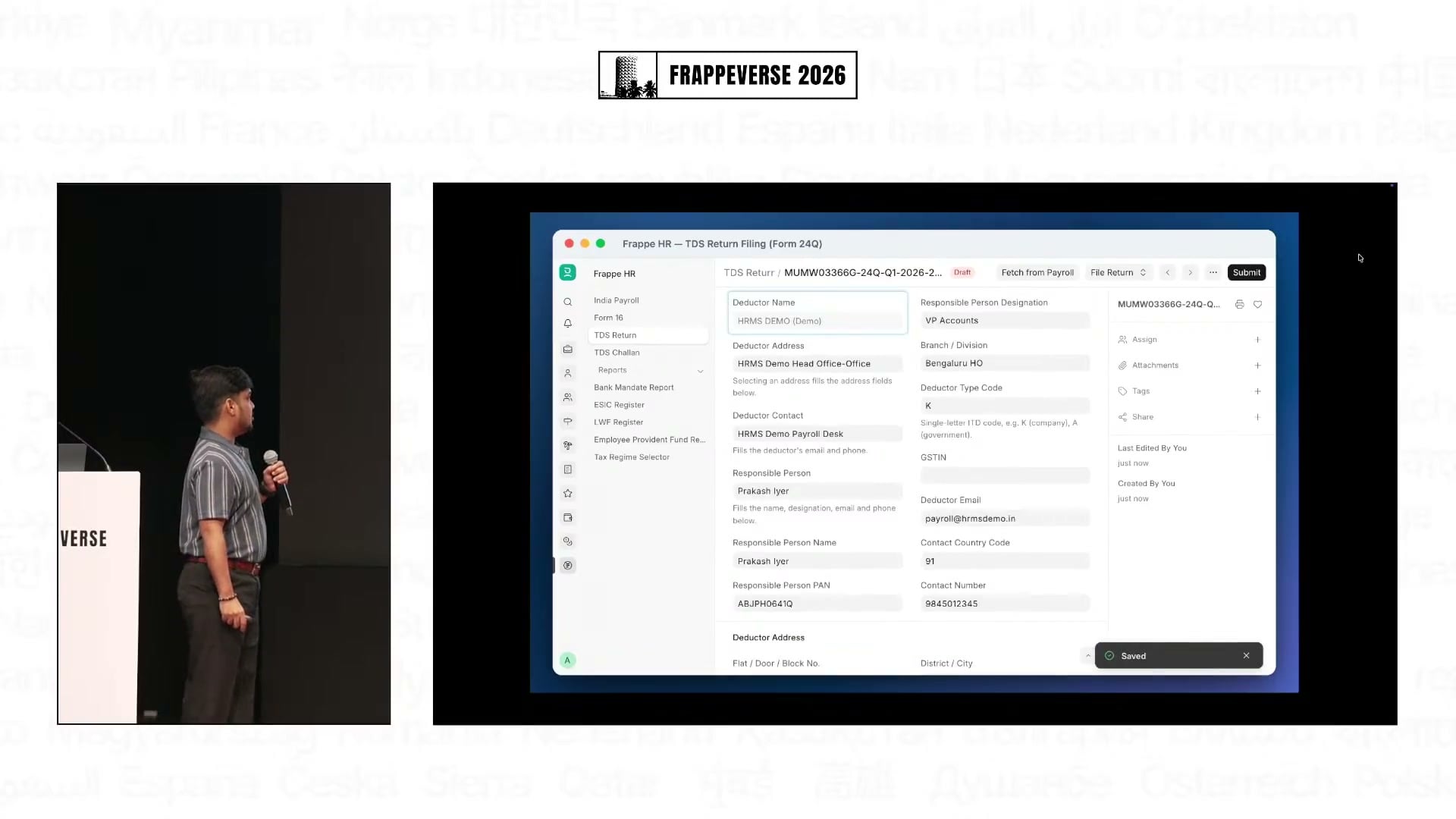
There is still an external integration behind that experience, but payroll users no longer need to manage the government-facing workflow separately from their records. Frappe also plans to bundle the integration with Frappe Cloud, as it does for GST through India Compliance. Garg said that would remove the need to procure separate API keys or pay an additional API cost. The filing feature was presented as delivered; the Frappe Cloud bundle was a future commitment.
Lending adds the documents required before disbursal
Garg then moved to Frappe Lending, beginning with the Key Fact Statement required before a bank or non-banking financial company disburses a loan. Frappe Lending can now generate the statement from a loan application in the format expected by the Reserve Bank of India, attach a validity date and record the borrower’s acknowledgement.
The Loan Application records the borrower’s acknowledgement and keeps the Key Fact Statement beside the loan data that produced it. In the demo, the loan became ready for disbursal only after the acknowledgement was recorded, so the document remains part of the process instead of becoming a parallel paper trail.
Frappe Lending also adds Digio-backed e-signing and eKYC. The keynote showed identity and Aadhaar verification through Digio and DigiLocker, with the result updating the application status. Garg said these actions are available as generic Frappe workflow primitives, so teams can place them at the appropriate point for their own loan process. He demonstrated the signing flow and skipped a separate walkthrough of the similar eKYC path.
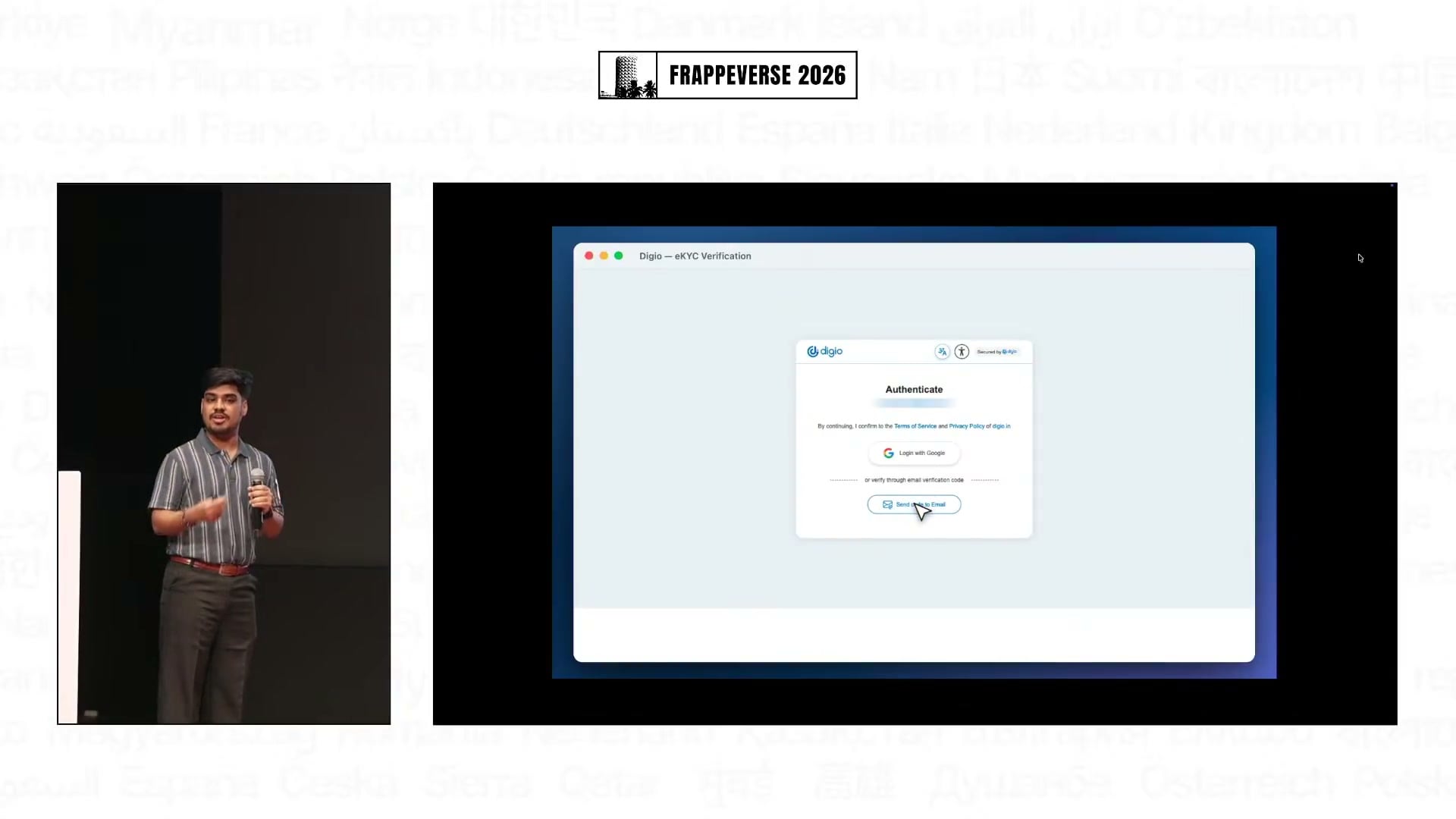
These relatively calm screens hide difficult compliance work. India Payroll and Frappe Lending are turning rules that Indian payroll teams and lenders repeatedly need into maintained, reusable workflows, leaving administrators to run payroll and loans instead of rebuilding the machinery around them.
Watch the full Day 1, Track 1 livestream from the start of this keynote